प्रमाणित Spessartite डीलर और खरीद गाइड
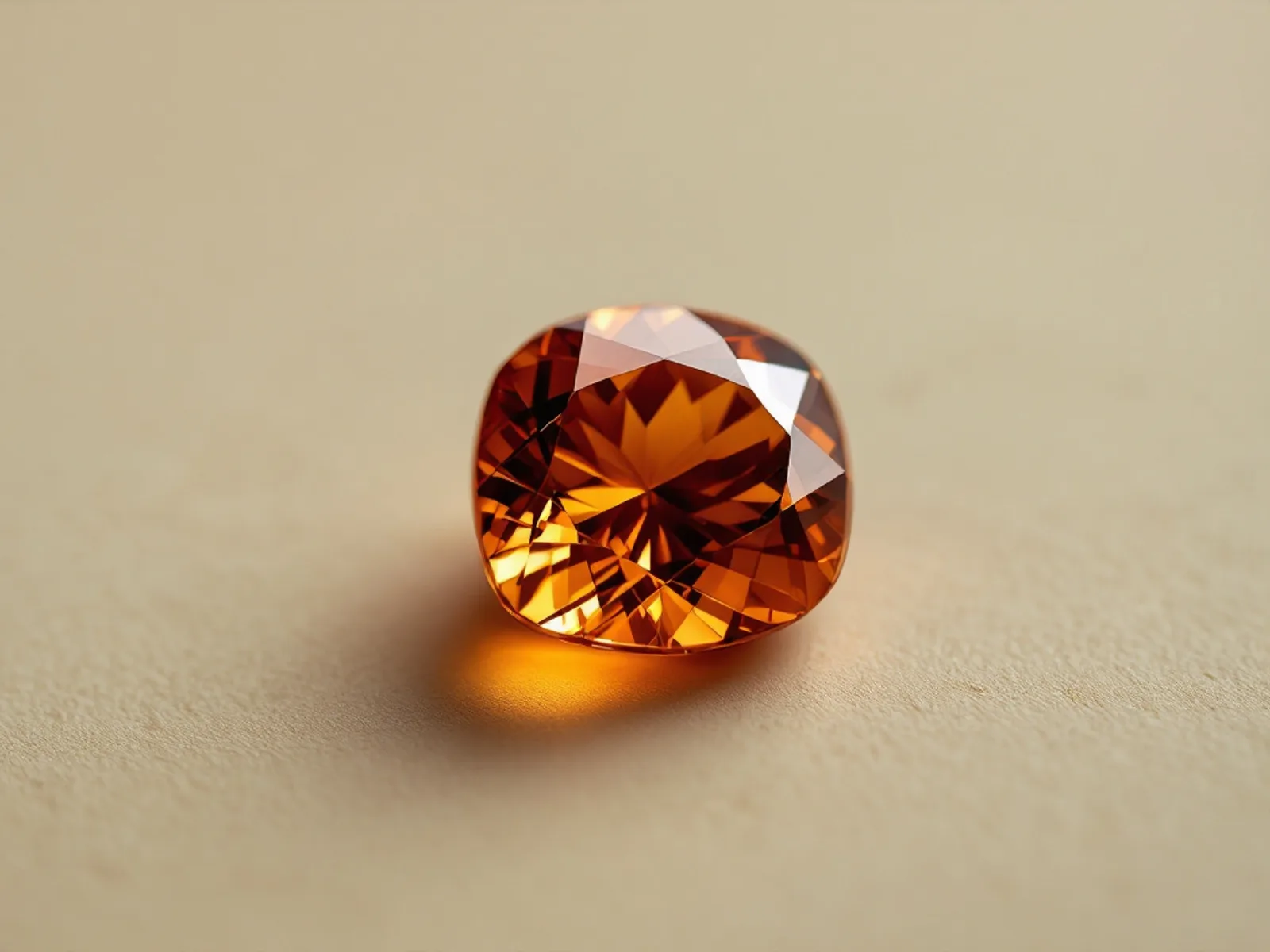
Spessartite is the manganese garnet, and its orange has no equal among untreated gems. The finest stones show a pure mandarin hue with no brown and no red drag, a colour the trade calls fanta orange and charges for accordingly. Nothing is done to the material to get there. In a market where nearly every ruby and sapphire has been through a furnace, a stone that arrives as it left the ground counts for something. What follows covers the Kunene find that made the modern market, what has come out of Nigeria and Tanzania since, why a report on spessartite concerns identity rather than treatment, and what to ask.
Mandarin, fanta and everything below them
The name comes from the Spessart hills in Bavaria, where the mineral was first described in the 1830s. It sits at the manganese aluminium end of the garnet series, and pure spessartite is orange. Almost nothing in the trade is pure. Pyrope and almandine mix in, and that is what drags the colour towards red or brown.
Mandarin garnet began as the name for the Namibian material and has since been attached to anything orange, which has cost the term most of its meaning. Fanta orange is the stricter word: saturated, pure, without a red or brown modifier, the colour of the drink it borrows from. It covers a small share of production. Below it come the reddish oranges, the orange reds, and the brownish oranges that fill most commercial parcels. A touch of red is forgivable and can even be handsome. Brown is not, and it takes the price down hard.
Two neighbours cause confusion. Malaya garnet, the pinkish orange pyrope-spessartite from the Umba valley, is priced as its own thing. Hessonite, the honeyed grossular from Sri Lanka, is not spessartite at all, though it has been sold as though it were.
The deposits, and how they behave
In 1991 spessartite of a colour nobody had seen came out of the Kunene river district on the border of Namibia and Angola. German dealers gave it the mandarin name, the market followed, and the deposit was substantially worked out inside a decade. That is a short run for a standard everything since is measured against.
Nigeria took over the volume at the end of the 1990s, from workings near Iseyin. Its stones run a shade redder than the Namibian ones and are often very clean. Tanzania produced a brief flush of large clean orange material at Loliondo from 2007, and Tunduru and Lindi keep up a steadier trickle. Mozambique, Kenya and Madagascar add smaller amounts, and old Ramona stones from San Diego County still change hands among collectors.
Supply behaves this way throughout. Deposits of the type flash and go quiet, so fine stones above 5 ct surface in runs and vanish, and the dealers holding them go on holding them. Origin by itself moves the price very little. A Nigerian stone of true fanta orange is worth what a Namibian one is, and the colour is what is being bought.
What a report is for here
Spessartite is not treated. No accepted enhancement exists, so the orange is always the stone's own, and a report will either say as much or leave the treatment line empty. Certification is therefore a question of identity.
The species grades continuously into pyrope and almandine, and where one stops and the next begins is a matter of chemistry rather than of eye. A report from GIA, Gübelin, SSEF or AIGS confirms that a stone sits at the manganese end of the series. GIA writes the name as spessartine, following the mineralogists rather than the trade, which makes buyers worry needlessly. The same report settles whether an orange stone is garnet at all, the point at issue when a hessonite or a piece of orange glass has been handed the mandarin name. Origin opinions are offered by some laboratories and not others, and are not the norm.
Judging a stone, price and what to ask
Colour purity comes first and is judged in daylight, because a warm bulb flatters every orange and hides brown. Clarity follows. Spessartite carries fine needles and wavy filaments as a matter of course, and in a strong colour a little does no harm, while in a pale stone it shows as a veil. Cutting counts for more than usual, since the refractive index is high and a well proportioned stone throws light back like almost nothing else in orange. A windowed one goes dead through the middle. The garnet has no cleavage and sits at 7 to 7.5, so it wears well, which is worth remembering when the alternative orange on the tray is a fire opal.
Price rises past 3 ct and again past 5 ct in fine colour, because clean stones at those weights are uncommon. Ask what the laboratory calls it if there is a report, and whether the dealer sells it as spessartite or as a mixed garnet. Ask to see it away from the lamp. The two misdescriptions we meet most often are brownish mixed garnet dressed up as mandarin, and Namibian written on the invoice for a Nigerian stone, because that word still carries something.
Buying through the register
The dealers listed on this page have been checked by GemsVerified for legitimacy, certification practice and disclosure. GemsVerified does not grade or guarantee individual stones, and no listing should be read as though it did.
Use the register to compare declared weights, origins and asking prices, then ask for laboratory confirmation of species on anything significant. Get the treatment line in writing even though you know it will read none. The colour you judge for yourself, in daylight.
रजिस्टर पर डीलर
निर्देशिका में सभी देखें →इस पृष्ठ के लिए वर्तमान में कोई विक्रेता स्वीकृत नहीं हैं। जैसे-जैसे विक्रेता सत्यापन पास करते हैं, कैटलॉग बढ़ता है।
प्रश्न, उत्तरित
Is spessartite treated?
No accepted treatment exists for the species, so the orange is natural and a report will either say so or leave the line blank. Listings on the register record treatment as none explicitly rather than omitting it, on the principle that a house which writes down the easy declarations is the house that will write down the hard ones.
What does fanta orange mean?
It is the trade term for the pure saturated mandarin orange of the finest spessartite, carrying no brown and no red modifier, and named after the colour of the drink. Only a small share of production reaches it. Most commercial material is reddish orange or carries a brown component, and brown in particular takes the price down a long way.
Is mandarin garnet the same thing as spessartite?
Mandarin garnet is a trade name whereas spessartite is the mineral. The name was coined for the bright orange Namibian material found on the Kunene river in 1991, and it has since been applied to almost any orange garnet, brownish and mixed stones included. Ask a dealer which he means, and check the species on an independent laboratory report.
Where does spessartite come from now?
Nigeria supplies most of the volume from workings near Iseyin, while Namibia's Kunene district, which set the standard in the 1990s, is largely finished. Tanzania gave a notable flush at Loliondo from 2007 and still produces from Tunduru and Lindi. Mozambique, Kenya, Madagascar and Brazil contribute, and old Californian material circulates among collectors.
How can I tell that an orange stone is really spessartite?
By chemistry rather than by eye, since spessartite grades into pyrope and almandine and hessonite grossular from Sri Lanka can pass for it in warm light. An independent laboratory report, from GIA or a house of that standing, places the stone at the manganese end of the garnet series and confirms that it is garnet at all. The seller's word does not settle it.