Afghanistan — 販売店・仕入れ先ガイド
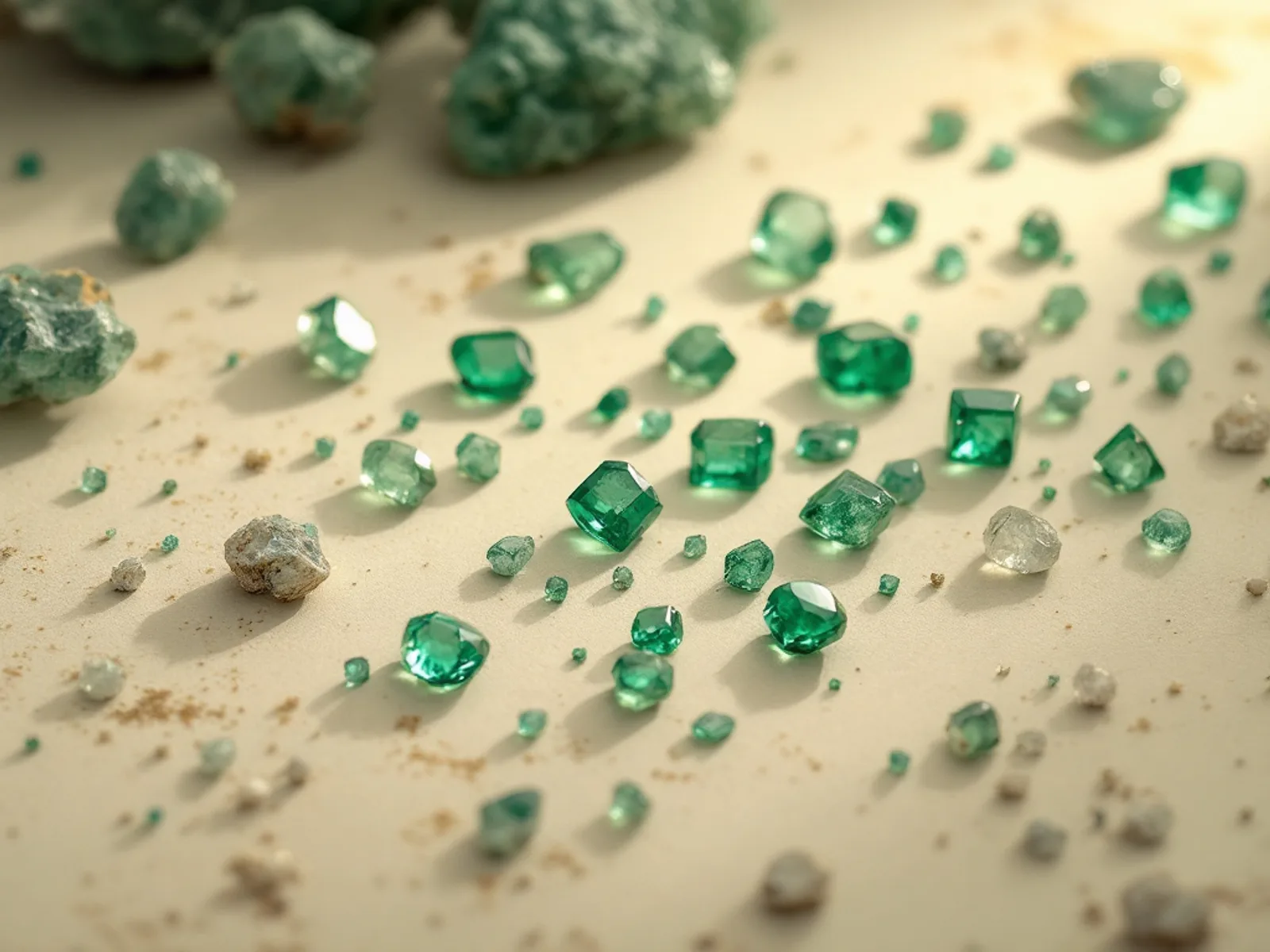
Afghanistan sells four quite different things to the gem trade, and the paperwork on all four tends to be written somewhere else. Emerald from the Panjshir valley. Ruby and pink sapphire out of the marble at Jegdalek. Spinel and lapis from Badakhshan, where the lapis pits have been worked for six thousand years. Then the pegmatite gems along the Pakistan border, kunzite above all. What follows covers each region, the treatments to expect, what laboratories will and will not say about Afghan origin, and why so much of this trade is done in Peshawar rather than Kabul.
Emerald from the Panjshir
The valley runs north-east of Kabul and the workings sit high above its floor, at Khenj, Mikeni and Buzmal, cut by hand and by blasting since the 1970s. Colour is why anyone climbs up there. Panjshir emerald comes out saturated, often with a faint blue cast, and laboratory studies have set the best of it beside fine Colombian material without apology. The crystals run small. A clean stone above 3 ct is scarce, and priced as scarce things are.
Oiling follows the usual conventions and the report should grade it: none, insignificant, minor, moderate or significant. Then the awkward part. Panjshir stones can carry the jagged multiphase inclusions that an older generation of gemmologists read as proof of Colombia, so separation now rests on trace-element chemistry rather than on what the microscope suggests. Some dealers calling a Panjshir stone Muzo believe it. Others have done the arithmetic. Either way it is the commonest misdescription on this page, and it has begun to run in the opposite direction too, now that Panjshir carries a name of its own.
Jegdalek, and the Mogok resemblance
East of Kabul, on the Jalalabad road, marble at Jegdalek has given up ruby and pink sapphire since Mughal times. Marble-hosted means very little iron, and very little iron means the stones glow red under ultraviolet, exactly as Mogok material does. Sellers worked that out long ago. Most of the output is pink to purplish red rather than the saturated red a laboratory will agree to call ruby, and clean stones above 2 ct are uncommon.
A fair share of it has never seen a furnace. That is the real distinction here, and the phrase no indications of heating on an independent report is where the premium lives. GIA, Gübelin, SSEF, GRS and Lotus will all give Afghanistan as an origin opinion on corundum. We would not pay an unheated price on a dealer's word alone.
Badakhshan: spinel first, then lapis
Badakhshan is the older story. The Kuh-i-Lal spinel workings lie on the Tajik bank of the Panj, and they supplied the treasuries of medieval Asia and Europe with what everyone then called balas ruby, a name worn down from the province's own. The Black Prince's Ruby is spinel. So is the Timur Ruby. Spinel is not routinely treated, which is much of why the trade came back to it, though fewer laboratories will commit to a spinel origin than to a ruby one, and several write Tajikistan or Afghanistan and stop there.
Lapis is the other half of the province. Sar-e-Sang, in the Kokcha valley, remains the reference against which every other deposit is judged: deep ultramarine, calcite held to a minimum, a scatter of pyrite that nobody minds. Weaker grades are dyed or waxed to bury the white. Chilean lapis is dyed as a matter of routine and sold under an Afghan label. Lapis being a rock rather than a mineral, a report will name it, comment on dye if it finds any, and go no further.
Kunzite and the pegmatite belt
Nuristan, Kunar and Laghman hold the pegmatites, and between them they anchor the world's supply of gem spodumene. Kunzite from Mawi and Nilaw arrives as lilac to violet-pink crystals the length of a forearm. Tourmaline from Paprok and the Kunar valley runs pink, green and bicolour, heated on occasion to lighten a dark stone; aquamarine and morganite come off the same fields.
Colour stability is the question to put here. Kunzite is irradiated often enough to deepen the pink, and irradiated colour does not hold; even untreated kunzite pales after years of strong daylight, and the green irradiated spodumene sold as hiddenite fades quicker still. Prices in this group are modest, which is exactly why declaration gets skipped. Laboratories seldom issue origin for these species. They identify the stone and state treatment where it can be seen.
How the goods leave
Rough and cut stones move through dealers in Kabul and across the border to Peshawar, whose Namak Mandi bazaar has handled Afghan material for generations. Bangkok, Jaipur, Dubai and Hong Kong come after. Much of the emerald is cut in Peshawar or Jaipur rather than at home. There is no state auction of the sort Burma once ran, export paperwork may name Pakistan rather than Afghanistan, and moving money is a nuisance for everyone concerned.
What that leaves is the dealer, plus whatever report the buyer commissions at destination. Both count for more here than in a centralised market. A dealer who can tell you which valley a parcel came from, and through whose hands, is worth paying for. One who cannot is selling a stone and a story.
Buying through the register
Dealers listed on this page have had their legitimacy, certification practice and disclosure checked before admission. Ask for the laboratory report. Have the treatment stated in writing, and set the origin on the report against the origin on the invoice.
GemsVerified verifies dealers, not the individual stones they carry. What a stone is comes from an independent laboratory, and it describes that stone on the day it was tested.
登録されているディーラー
ディレクトリ内のすべてを表示する →現在、このページには登録済みのディーラーはいません。ディーラーの認証が完了するにつれて、カタログは順次充実していきます。
よくある質問と回答
What gemstones does Afghanistan produce?
Emerald from the Panjshir valley, ruby and pink sapphire from Jegdalek, spinel and lapis lazuli from Badakhshan, and kunzite, tourmaline, aquamarine and morganite from the pegmatites of Nuristan, Kunar and Laghman. Emerald and kunzite are the two the wider market depends on. Lapis from Sar-e-Sang is still the grade every other deposit is measured against.
Is Panjshir emerald as good as Colombian?
The best of it stands the comparison on colour and clarity, and published laboratory work has said so. Panjshir crystals tend to be small and intense, so large clean stones are rarer than from Muzo or Chivor. Because the inclusions overlap, laboratories separate the two by trace-element chemistry, and Panjshir emerald has reached the market as Colombian more than once.
Is Jegdalek ruby heated?
Often it is not. A good deal of Jegdalek material is sold unheated, and the wording no indications of heating on an independent report is where the premium rests. Colour tends towards pink or purplish red rather than deep red, and clean stones above 2 ct are uncommon. Ask to see the report before paying an unheated price.
Do laboratories give Afghanistan as an origin?
For corundum and emerald, yes. GIA, Gübelin, SSEF, GRS, AIGS and Lotus all report Afghan origin where the evidence supports it. Origin is an expert opinion rather than a fact of export, and it comes from an independent laboratory, not from the seller. For kunzite and tourmaline an origin opinion is rarely offered at all.
Does kunzite fade?
It can. Kunzite is sometimes irradiated to deepen the pink and that colour is unstable; even natural colour softens over years in strong sunlight. Irradiated green spodumene sold as hiddenite goes faster. Ask whether the stone has been irradiated, keep it away from direct sun, and treat an unusually deep colour with some suspicion.