Geprüfte „Sapphire“-Händler & Kaufberatung
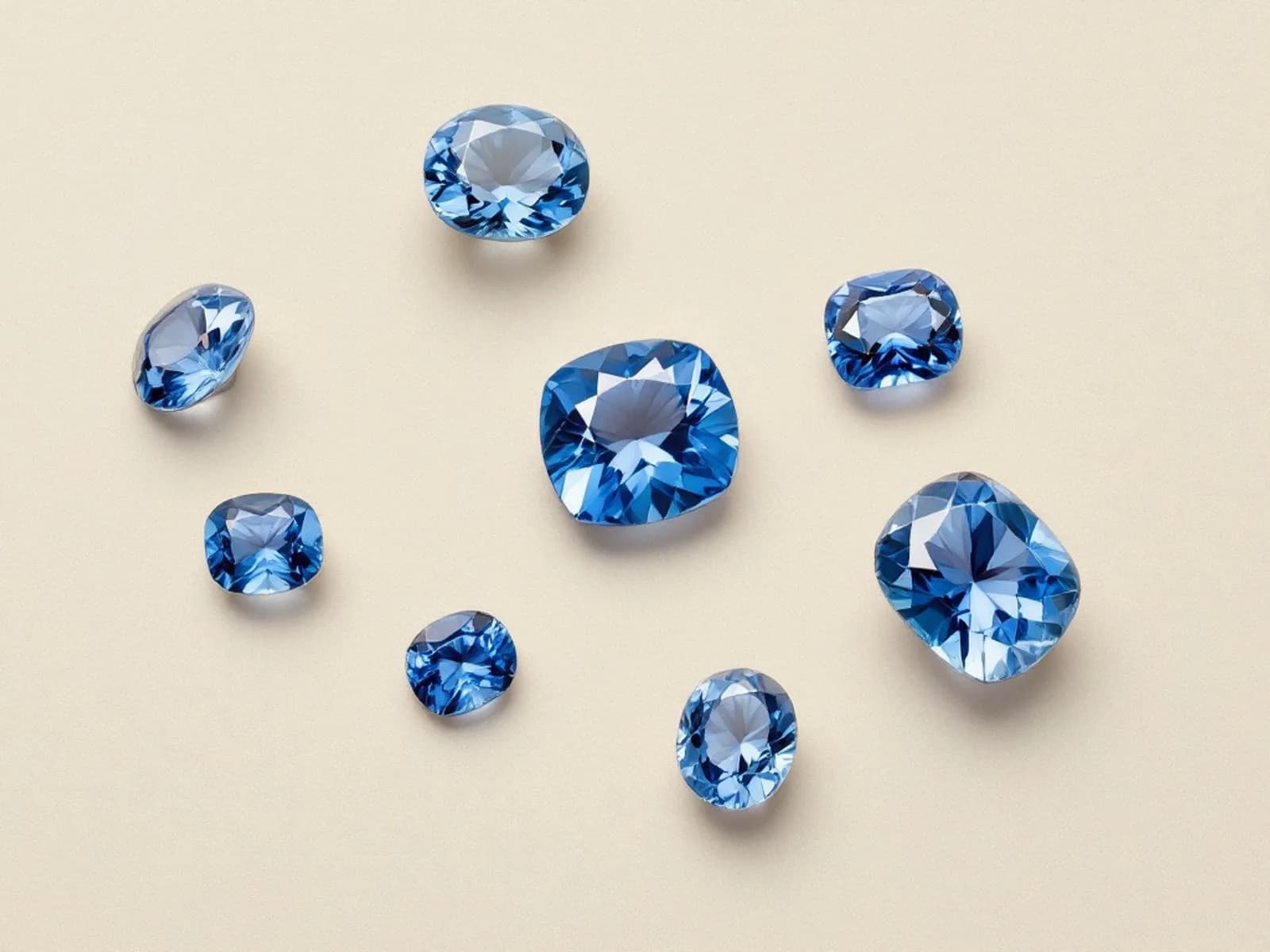
Sapphire is corundum in every colour except red, and red is ruby. Ask most buyers what they mean by the word and they mean blue, though the same mineral comes out of the ground pink, yellow, green, purple and, rarely, in the pinkish orange the Sinhalese named after the lotus. Almost all of it has been through a furnace. The stones that have not, and can prove it, are where the money is. What follows sets out the colour words dealers actually use, the sources that move price, how a report words heat and beryllium, and what to ask before anything changes hands.
Royal blue, cornflower, padparadscha
Corundum is aluminium oxide. Iron and titanium together give blue; chromium gives pink or red. Royal blue is the deep, strongly saturated blue with a slight violet lean and a medium-dark tone that the best Mogok and top Ceylon stones show. Cornflower is the lighter, softer, vivid medium blue that stays lit in daylight, and it has been the Kashmir word for over a century, where a haze of fine silk gives the colour its velvet. Neither term is a measurement. GRS will print "royal blue" or "cornflower blue" on a report if a stone falls inside its colour range. GIA prints neither.
The other colours are grouped as fancy sapphire: pink, yellow, purple, green, and colour-change stones that shift from blue to purple under a lamp. Padparadscha is the one that matters for price. It is a delicate pinkish orange to orangey pink, and the laboratories draw its boundary tightly. Lean too far to pink and the report says pink sapphire; too far to orange and it says orange sapphire, at a fraction of the price. The word therefore has to appear in full on the report. "Padparadscha-like" and "pad colour" are what dealers write when they cannot get it.
Kashmir, Burma, Ceylon, Madagascar, Montana
Kashmir came out of one small deposit high in the Padar district, worked mostly between the 1880s and the 1930s, and almost nothing is mined there now. Stones turn up at auction and in private sales, and the origin opinion on the report is most of the price. We would not pay a Kashmir premium on a dealer's word.
Burma, meaning the Mogok stone tract, gives rich royal blues that run a shade darker than Ceylon. Sri Lanka, still Ceylon in the trade, is the steadiest source of fine sapphire and of nearly all padparadscha, and its blues tend lighter, brighter and cleaner. Madagascar has fed the market since the late 1990s, from Ilakaka first and lately Bemainty, and its best blues sit so close to Ceylon and Burma that laboratories cannot always separate them. Montana is a different proposition: small teal and steel-blue stones from the gravels around Rock Creek, deeper blue from Yogo Gulch, for people who want a source they can trace. Thailand, Cambodia, Australia and Nigeria mostly turn out darker, inkier material.
Origin is an opinion. A laboratory reads inclusions, trace-element chemistry and spectra and reaches a view; two good laboratories can differ on the same stone. For anything sold as Kashmir or Burma, or an unheated Ceylon over a couple of carats, the trade expects a report from Gübelin, SSEF, GIA, AGL or GRS.
Heat, no heat, and beryllium
Nearly every sapphire has been cooked. Heating corundum somewhere north of 1,000 degrees dissolves the silk, clears the stone and shifts the colour, permanently, and the trade accepts it without a murmur and assumes it unless a report says otherwise. GIA and SSEF write "no indications of heating"; GRS writes "no indication of thermal treatment". A heated stone gets "indications of heating" or its equivalent. Fine colour with no heat can double or treble the price, which is the whole reason the claim has to come from a laboratory and not from whoever is selling. Low-temperature heating, common on Ceylon and Montana goods, is a separate headache: it leaves fewer traces and only the better-equipped laboratories catch it with any consistency.
Beryllium is a different animal. The sapphire is heated with a beryllium source, the element soaks into the crystal, and pale rough comes out orange, yellow or something near enough padparadscha to fool people; some blues go darker. It has to be disclosed by name, and reports say something like "indications of heating with the presence of beryllium". Glass filling and dye turn up in cheap material and are written up as such.
Price, and what to ask
Colour first. Source, treatment, size and clarity follow. The buyer wants a vivid, even blue that stays alive across a dinner table and not only under the dealer's daylight lamp; go dark or grey indoors and it is marked down hard. Unheated Kashmir and Burma sit at the top, unheated Ceylon and Madagascar next, then heated stones of good colour. Per-carat prices step up sharply past 3 ct and again past 5 ct for top colour. A stone cut deep to hold weight faces up small for its carat and may show a window through the middle.
Ask three things: heated or not, where the laboratory puts it, and which laboratory. The misdescriptions we see most are heated stones sold as no heat, heated pink-orange sapphire called padparadscha, beryllium-diffused stones written up as simply "heated", and a Kashmir label pinned to a velvety Ceylon.
Buying through the register
The dealers on this page have been checked by GemsVerified for legitimacy, certification practice and disclosure. Each works with recognised laboratories and states treatment plainly.
Ask for the report regardless. Get treatment and origin in writing, and match the report to the stone by weight and measurements. GemsVerified verifies dealers, not individual stones. Afterwards, the report is what you have.
Händler im Register
Alle Elemente im Verzeichnis anzeigen →















Sapphire nach Herkunft
Fragen und Antworten
What does no heat mean on a sapphire report?
That the laboratory found nothing to suggest heating. GIA and SSEF print "no indications of heating"; GRS prints "no indication of thermal treatment". Fine unheated colour is scarce and priced accordingly, so the claim needs an independent report behind it, from GIA, Gübelin, SSEF or another laboratory of that standing, and not just the seller's say-so.
Is Ceylon sapphire heated?
Most of it. Sapphire from everywhere is heated as a matter of course. Sri Lanka happens to produce a good share of the world's unheated fine sapphire, hence "Ceylon no heat" being called across every fair, but that tells you about the island rather than the stone in your hand. The stone in your hand needs a laboratory report.
What is a padparadscha sapphire?
A fancy sapphire in a delicate pinkish orange to orangey pink, named from the Sinhalese word for lotus blossom. Laboratories apply the term narrowly. A stone that leans too pink or too orange gets called pink or orange sapphire and priced well below. Sri Lanka is the classic source, with some from Madagascar and Tanzania.
What is the difference between royal blue and cornflower blue?
Tone and saturation, mostly. Royal blue runs deep and strongly saturated, medium-dark, with a violet lean; the top Mogok stones show it. Cornflower sits lighter and softer, a vivid medium blue with the velvet look that fine silk gives Kashmir stones. GRS will print either on a report if the stone falls inside its range. Most other laboratories will not, and a dealer can say whichever he likes.
What is beryllium diffusion in sapphire?
A treatment in which sapphire is heated with beryllium so the element enters the crystal and changes the colour, usually turning pale material orange, yellow or something close to padparadscha. It has to be disclosed by name, and laboratories report it separately from ordinary heating. A diffused stone is worth a great deal less than one of natural colour.