Godkjente forhandlere av «Morganite» og kjøpsveiledning
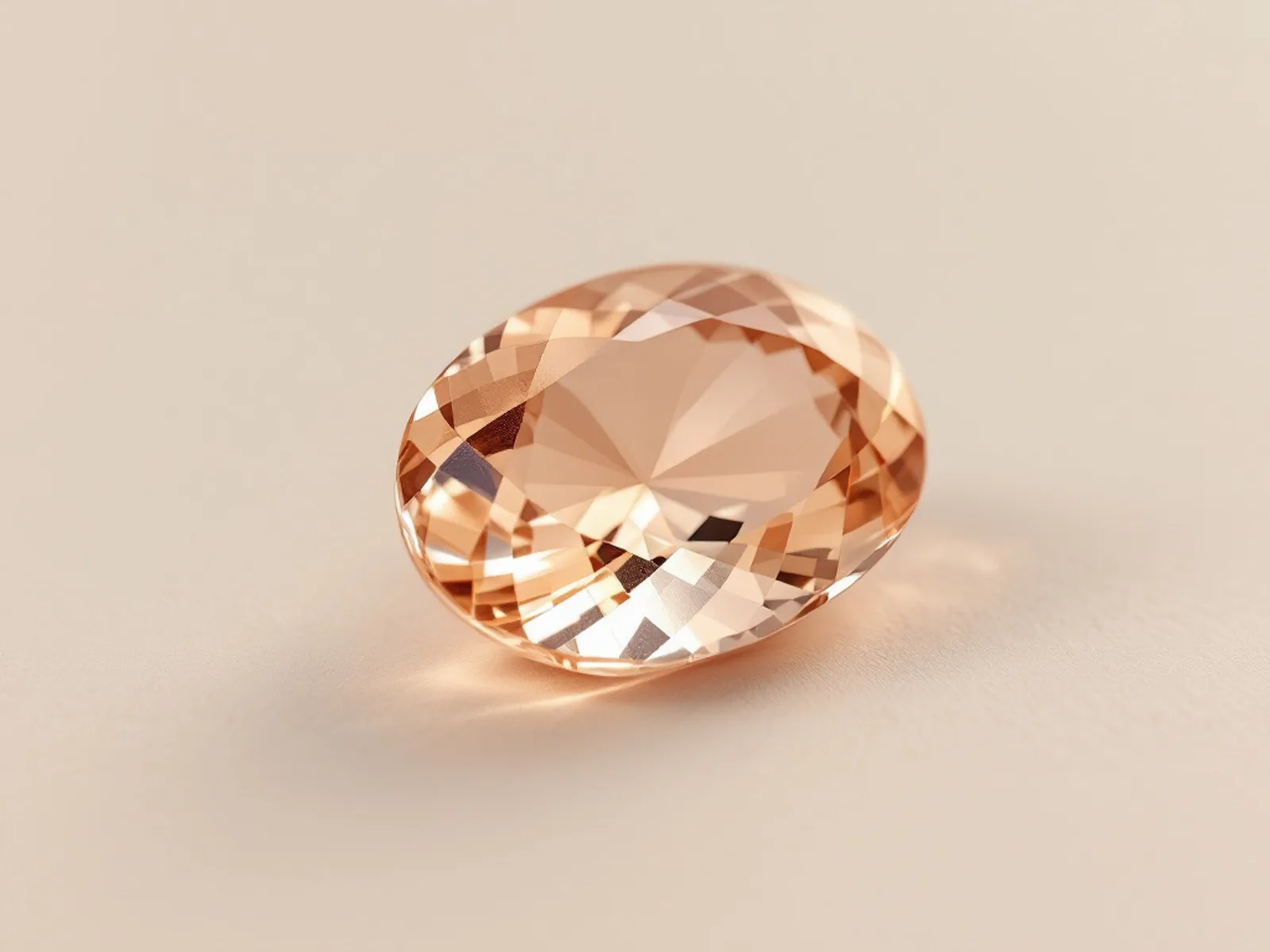
Morganite is the pink to peach beryl, the same mineral as emerald and aquamarine, coloured by manganese rather than by chromium or iron. Kunz put the name forward in 1910 for J. P. Morgan, whose collection he had spent years assembling, after fine pink crystals came out of Madagascar. For most of the century that followed it stayed a collector's beryl. Bridal jewellery changed that. Clean crystals at ten and twenty carats, a soft colour and a modest price gave designers room that no other pink gem allows, and the rose gold decade did the rest. Almost all of it has been heated, and no laboratory can prove otherwise. This page covers the colour vocabulary, the sources, what heat does, and what to ask.
Pink, peach and the grey problem
Manganese gives the colour. The commercial range runs from a blush so pale it disappears once set, through salmon, to a warm peach with a clear orange lean. Which end costs more depends on who is asking. Pure pink was the collector's colour for decades and still leads at the top of the market; peach has been the bridal colour since the trend began, and dealers price for whichever their clients are buying that season. Grey is the fault to watch. A trace of it flattens the stone under any light, and it shows against a white card far sooner than it does in a black tray.
Saturation in beryl builds with the distance light travels through the stone, which is why size and colour are tied together here in a way they are not in ruby. A 1 ct morganite from ordinary rough is close to colourless. Five carats from the same crystal shows a fair pink; fifteen can be properly rosy. Cutters answer this with deep pavilions and generous sizes, and the variety is therefore sold in weights that would be unaffordable in almost any other gem. Morganite is also dichroic, pale pink one way and a bluish pink the other, so orientation matters more than it looks as though it should.
Minas Gerais, Madagascar, and a quarry in Maine
Brazil supplies most facet rough, out of the Minas Gerais pegmatite belt that also gives aquamarine and tourmaline, and much of it is cut in Governador Valadares before it leaves the country. Madagascar is the historic source and still yields some of the finest pink. Mozambique, Nigeria and Afghanistan send smaller parcels, often better ones, and Nigerian material tends to a stronger peach. Pala in California gave the United States its first pink beryl a century ago, alongside the kunzite. Maine has produced the largest crystals on record: the Rose of Maine came out of a quarry at Buckfield in October 1989 and weighed a little over twenty kilos.
Origin does not drive price here as it does in sapphire. Laboratories do not offer an origin opinion for the variety as a matter of course, so a country on an invoice is provenance rather than a grade, and it should not be paid for as one.
Heat, irradiation and the limits of a report
Most morganite has been heated, at a few hundred degrees, to drive off the yellow and leave a stable pink. It is permanent, the trade accepts it without argument, and it must still be declared. It is also undetectable. Heat leaves no trace in beryl at those temperatures, so no report will carry the line "no indications of heating" on a morganite, and a dealer offering certified unheated material is promising something a certificate cannot deliver. GIA and its peers identify natural beryl, variety morganite, then either say nothing on the treatment line or note that heating cannot be determined.
There is a wrinkle worth knowing. Since heating is what removes the orange, a good deal of the peach material bridal buyers now prefer sits at the untreated end of the stock, and the pink is what came out of the oven. Irradiation is the other treatment and it deserves a direct question, because the result is not always stable and because it is used to give small stones a colour the crystal never gave them. Ask about it by name.
Judging a stone, price and what to ask
Daylight, a white card, and take the stone away from the shop lamp, which flatters anything pink. Eye clean is the expectation rather than an achievement; there is enough clean rough about that an included morganite has no defence. Look through the table for a window. Price follows saturation, then size, then cut, and stays modest by coloured stone standards, which is a good part of the appeal.
Ask whether the stone is heated and expect yes or unknown. Ask about irradiation separately. On anything over 5 ct ask for a laboratory identification, which confirms the species and rules out the pink glass and the hydrothermal synthetic beryl that circulate online. Two misdescriptions recur. One is pink emerald, a name the trade and the laboratories have refused. The other is a small stone of improbable colour, sold without a word about how it got there.
Buying through the register
The dealers on this page have been checked by GemsVerified for legitimacy, certification practice and disclosure. That is a judgement about the house, not about any stone in its stock. Use the listed treatments and weights to draw up a shortlist, then take the detail up with the dealer directly.
Get the treatment statement in writing, heated or unknown, and a laboratory identification on anything of size. GemsVerified verifies dealers, not individual stones. With morganite the dealer's word on heat is the only word available, so the question becomes whose word you are willing to take.
Forhandlere i registeret
Vis alt i katalogen →


Spørsmål og svar
Is morganite heated?
Nearly all of it. A few hundred degrees drives off the yellow component and leaves a stable pink. The change is permanent and the trade accepts it, but it still has to be declared. Because heat leaves no trace in beryl, no laboratory can certify a morganite as unheated, and a dealer claiming otherwise is overreaching.
Why is small morganite so pale?
Colour builds with the path light takes through the stone, and morganite is weakly saturated to start with. Under 3 ct most stones face up close to colourless. Five carats and upwards is where the variety earns its keep, and cutters use deep pavilions for the same reason. Strong colour in a small stone invites a question about irradiation.
Is morganite the same thing as pink emerald?
No. Both are beryl, but emerald is the green variety coloured by chromium or vanadium, and morganite is the pink to peach one coloured by manganese. Pink emerald is a marketing name that the trade and the laboratories have refused. A seller using it is either careless or hoping the second word does work it has no right to do.
Can a laboratory tell whether morganite has been treated?
Not for heat, at the temperatures used. A report from GIA or another independent laboratory identifies natural beryl, variety morganite, and either leaves the treatment line alone or notes that heating cannot be determined. It still earns its fee by confirming the species and ruling out glass and synthetic beryl. The heat declaration has to come from the dealer.