Brazil — återförsäljare och inköpsguide
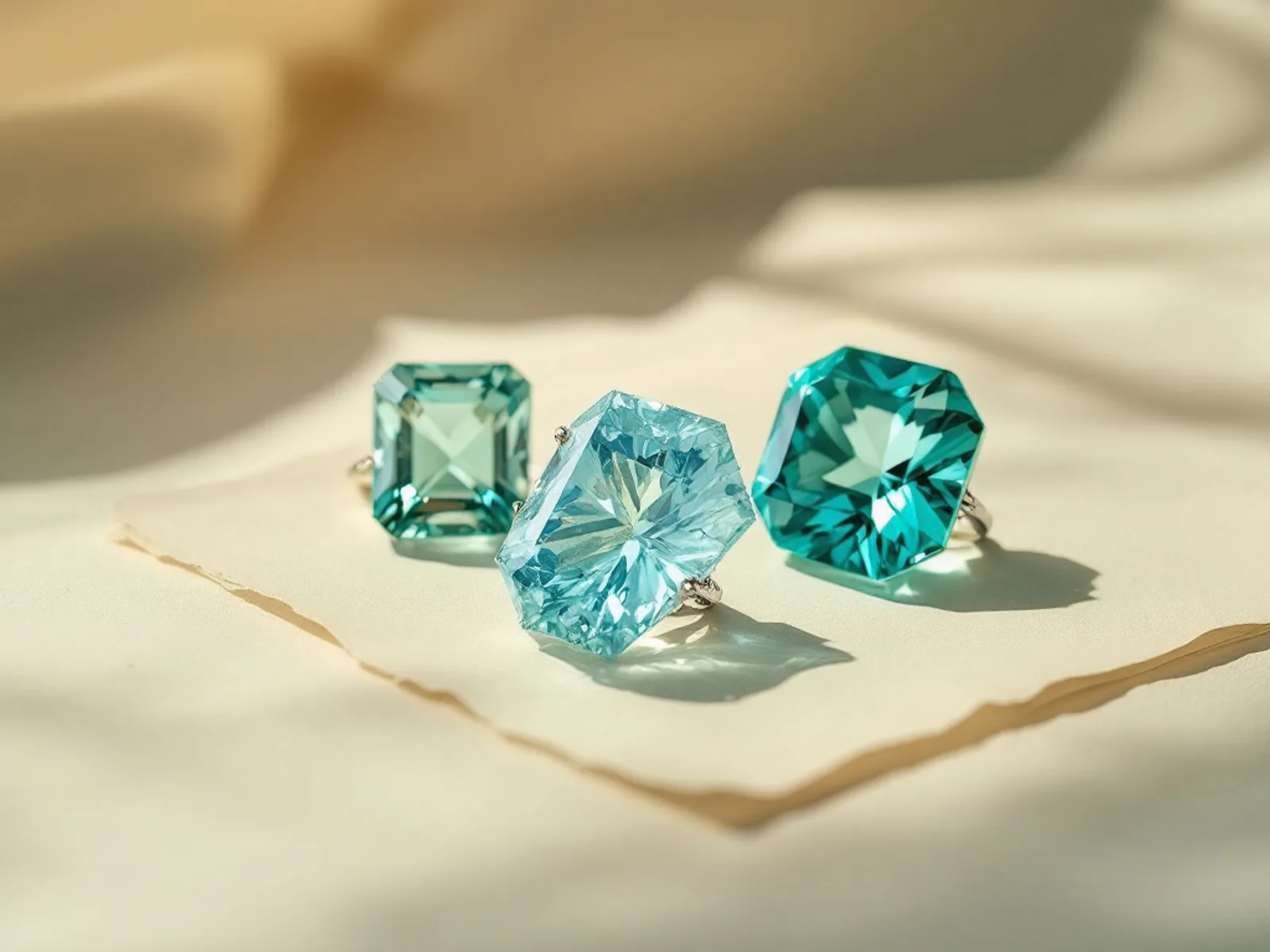
Brazil is the most varied gem producer on earth. No other country supplies the trade with so many species at once, from tourmaline in every colour through aquamarine, morganite, topaz and alexandrite to emerald from its eastern schist belts. The state of Minas Gerais alone would rank among the great origins if it stood as a country. This page covers the pegmatite districts and what each is known for, the Paraíba question, emerald and alexandrite, the treatments that vary by species, and the trade towns the material moves through.
Minas Gerais: the pegmatite belt
Minas Gerais anchors production. The pegmatite districts around Governador Valadares and Teófilo Otoni trade tourmaline, aquamarine and beryl in commercial volume. They have done so since German cutters from Idar-Oberstein settled there in the nineteenth century and sent rough home. Aquamarine comes from Santa Maria de Itabira, Marambaia and Pedra Azul. The deep blue Santa Maria colour is now a grade name applied to stones from anywhere, so ask what a listing means by it. Rubellite from the Cruzeiro and Jonas mines set the standard for red tourmaline. The Jonas pocket of 1978 is still talked about. Ouro Preto remains the world source for imperial topaz, mined at Capão and Vermelhão in orange to pinkish red. Nearby, the Hematita deposit found in 1987 gave alexandrite with a colour change as good as any on record. Emerald comes from Belmont and Itabira in the schist belt east of Belo Horizonte, and from Carnaíba and Socotó in Bahia.
Further south, Rio Grande do Sul supplies amethyst and citrine in geode quantity, and most commercial citrine is amethyst that has been heated.
Paraíba tourmaline
Paraíba state gave its name to the copper-bearing tourmaline dug at São José da Batalha in the late 1980s. It is still the most valuable tourmaline on the market. Copper and manganese together give the neon blue and green that nothing else in the trade matches. A fine Brazilian stone above 3 ct sells for more per carat than most sapphire. Later finds at Mulungu and Alto dos Quintos in neighbouring Rio Grande do Norte carry the same name. Most Paraíba tourmaline is heated to drive out purple and pink. The heat cannot be detected, and reports say so.
Then the wording. Under the harmonised laboratory definition, "Paraíba tourmaline" is a colour type of copper-bearing tourmaline and says nothing about country. Mozambique and Nigeria produce it too, and it trades under the same name at lower prices. Geographic origin goes on a separate line, if the laboratory can determine it. That is done by trace-element chemistry, with gallium, lead and bismuth ratios among the tell-tales. GIA, Gübelin, SSEF, GRS, AIGS and Lotus all give Brazilian origin opinions on cuprian tourmaline. Insist on a report confirming the copper content. Where the price assumes Brazil, insist that it states the origin too.
Emerald, alexandrite and the schist belt
Brazilian emerald grows in mica schist, like Zambian. So it carries more iron than Colombian stone and tends a shade darker or greyer. Belmont at Itabira, mechanised since 1978, is the largest single producer, with Nova Era and Capoeirana nearby. Oil and resin filling is standard. It is graded on the report from none through insignificant, minor and moderate to significant. Brazilian emerald sold as Colombian is a misrepresentation old enough to have grey hair. The report settles it. Alexandrite from Hematita is separated from Sri Lankan and Russian stone by inclusions and chemistry. Synthetics are common enough that a report is the norm above 1 ct.
Treatments across the range
Treatments vary by species, which is why declaration practice matters across the whole Brazilian range. Aquamarine and morganite are routinely heated to strip out yellow. The heat is undetectable, and reports write "may be heated". Blue topaz is colourless topaz irradiated and then heated. London blue, Swiss blue and sky blue are treatment grades, not deposits. The stones are held until residual radioactivity has decayed. Imperial topaz is usually untreated, though some pink is heated from orange-brown. Citrine, as noted, is mostly heated amethyst. Tourmaline is heated when it helps and rarely disclosed as more than possible. Alexandrite and most garnet are untreated. A dealer who states the treatment on each species without being asked is doing the job properly.
Teófilo Otoni, Governador Valadares and the export houses
Brazilian material moves through established cutting and export houses in Teófilo Otoni, Governador Valadares and São Paulo. Many are family firms of long standing with direct mine relationships. Teófilo Otoni calls itself the gem capital, and on a weekday its streets are a rough market. The town's fair each August brings foreign buyers in. From there goods go to Idar-Oberstein still, and to Jaipur, Bangkok, Hong Kong and Tucson. For copper-bearing tourmaline the report does the heavy lifting. For the wider range, a dealer with documented disclosure practice is the practical safeguard. Species by species, there is more to disclose here than anywhere else.
Buying through the register
The dealers listed on this page have had legitimacy, certification practice and disclosure checked. Ask for the laboratory report on anything sold as Paraíba, as emerald above 2 ct or as alexandrite. Ask for treatment in writing on everything, and see that the invoice matches the report.
GemsVerified verifies dealers, not individual stones. Their listings state treatment explicitly, which across a range as broad as Brazil is the detail that keeps a purchase honest.
Återförsäljare i registret
Visa allt i katalogen →




Frågor och svar
What stones come from Brazil?
Tourmaline of every colour including Paraíba, aquamarine, morganite, imperial topaz, blue topaz, emerald, alexandrite, amethyst, citrine and a long tail of others. Minas Gerais supplies most of it, with Paraíba and Rio Grande do Norte for cuprian tourmaline and Bahia for emerald. See the verified dealers below.
Does Paraíba tourmaline always come from Brazil?
No. Copper-bearing tourmaline from Mozambique and Nigeria trades under the same name, and laboratories define Paraíba by colour and copper content, not by country. Brazilian material commands the higher price. A report from an independent laboratory stating origin settles it where it affects price; the dealer's word does not.
Is Brazilian aquamarine heated?
Almost always. Heating removes the yellow or green component and leaves a purer blue; it is undetectable and reports write "may be heated". Nobody pays a premium for unheated aquamarine because nobody can prove it. Colour saturation and size drive price, and the Santa Maria name should be read as a colour grade, not a mine.
How can I tell Brazilian emerald from Colombian?
You cannot, reliably, by eye. Brazilian stone from the schist belt carries more iron and tends darker or greyer, but overlap is wide. An independent laboratory separates them by inclusions and trace-element chemistry and states origin as an opinion. Ask for the report on any emerald sold as Colombian at a Colombian price.
Is blue topaz natural?
The colour is not. Blue topaz is colourless Brazilian topaz irradiated and heated; London blue, Swiss blue and sky blue are treatment grades. Stones are held until residual radioactivity has decayed and the treatment must be disclosed. Imperial topaz from Ouro Preto is a different matter and is usually untreated.