Concesionarios autorizados de «Peridot» y guía de compra
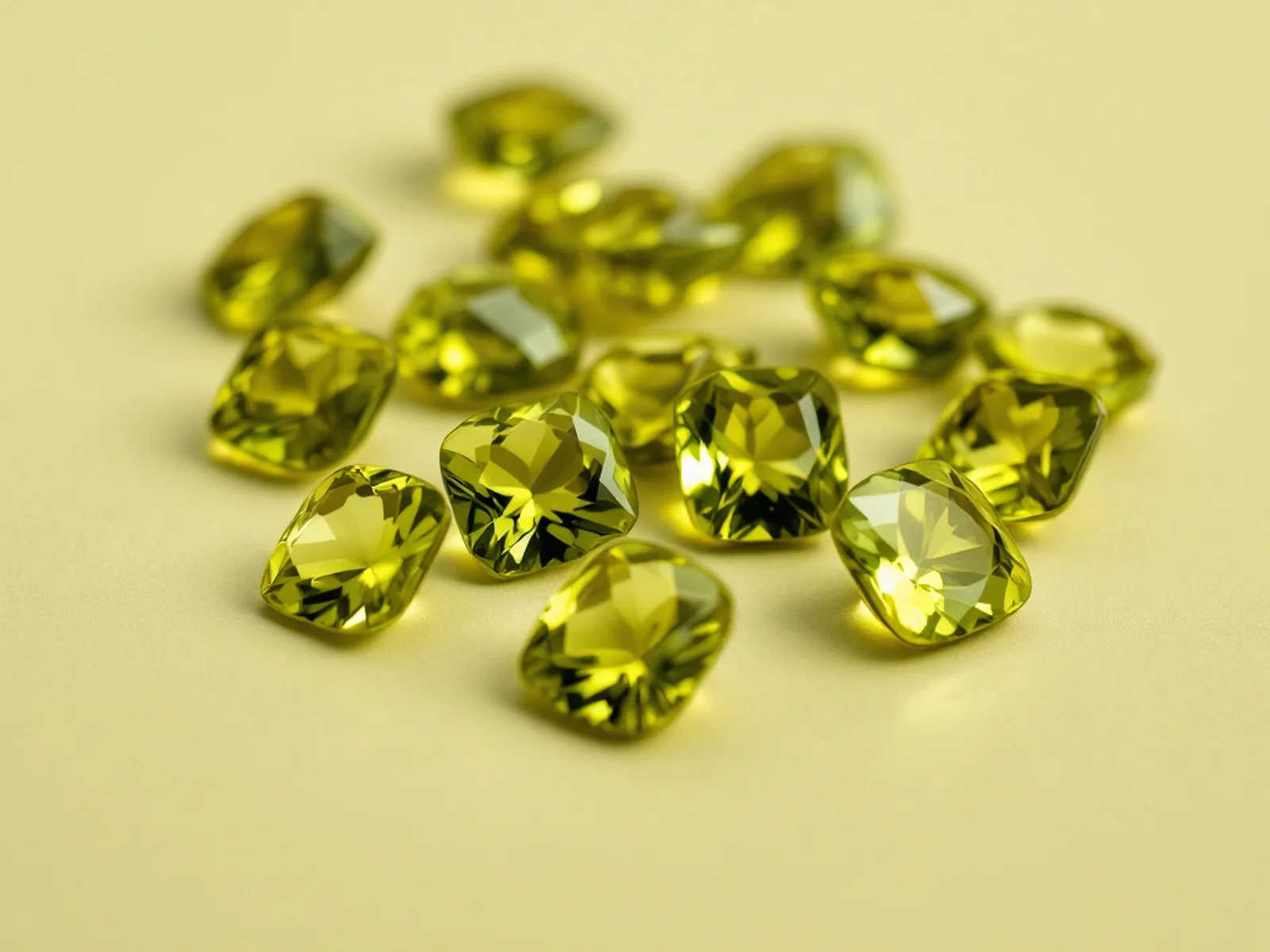
Peridot is gem olivine, and the iron that colours it green is part of the mineral rather than an impurity that can be put in or taken out. Nothing can be done to improve it, and nothing is. That clears away most of what a sapphire buyer has to worry about, and leaves the colour doing almost all the work. Where a stone was found matters near the top of the market and hardly at all below it. What follows sets out the sources that supply the trade now, the exhausted island that supplied the ancient world, why an untreated declaration is a description rather than a boast, and what to ask.
The colour, and why big stones show it better
Grass green with as little yellow as the material allows, and no brown whatever, is what the trade is after. Yellowish green is the ordinary run of it. Olive and brownish tones are marked down, and brown is the fault a warm shop lamp hides best, so take the stone to a window.
Saturation deepens with size, since the colour depends on how far light travels through the material before it leaves. A 2 ct stone and a 10 ct stone cut from one piece of rough do not look like relatives, which is why the price steps up at 5 ct and again at 10 ct in fine colour, and why small peridot stays cheap however clean it is. Peridot also keeps its green under lamplight, which is more than emerald manages. The Victorians called it the evening emerald and meant it kindly.
Birefringence is strong here. The back facets appear doubled when you look through the table, and a cutter deals with that by orientation rather than by hoping nobody notices. The inclusion to know is the lily pad, a small disc of stress fracture round a chromite crystal, the species signature, which passes without comment in moderation. A stone paved with them belongs in a cheaper parcel.
Where the material comes from
Pakistan has supplied the finest large peridot in the trade since the workings at Sapat Gali, in Kohistan, opened in the early 1990s. They sit above 4,000 metres and can be reached for a few months of the year, so material arrives in bursts and the parcels are fought over when it does. Stones run clean and saturated, and come over 10 ct with a consistency no other source matches. Kashmir peridot gets written on invoices from time to time, which is geography stretched further than it will go.
Rather less comes out of Pyaung Gaung, in the Mogok stone tract, though the best Burmese stones run a shade bluer than the Pakistani goods. Volume in the small commercial sizes is Arizonan, mined by Apache families on the mesa at San Carlos, and rarely clean above 5 ct. Melee parcels are mostly Chinese, out of Hebei. Vietnam, Tanzania and Norway each contribute a little, and once in a while a stone is cut from a pallasite meteorite and sold, honestly enough, as that.
Everything ancient came from Zabargad, a scrap of island in the Red Sea off the Egyptian coast, worked from antiquity and long since exhausted. The green stones on the shrine at Cologne came from there, and were catalogued as emeralds for centuries.
What a report says, and what it will not settle
No accepted enhancement exists for the species. A listing that declares no treatment is stating the ordinary condition of the material and should not be paid extra for saying so, though the odd cheap stone does turn up with a resin-filled fracture, which a dealer ought to be volunteering. A report, where one exists, reads natural peridot with no indications of treatment. On a stone valuable enough to justify the fee a major laboratory may add an origin opinion, drawn from inclusions and trace chemistry, and that opinion is the laboratory reading the stone rather than the seller describing it.
Which brings us to the real difficulty, because the trouble in peridot has never been treatment. Green glass and green tourmaline both circulate under the name, though the doubling gives real peridot away and a hand lens finds bubbles in glass. Chinese and Arizona goods get written up as Burmese or Pakistani, since those words are worth money and few buyers can tell by eye. A Sapat attribution on an invoice, with nothing behind it, is worth about what the paper cost.
Wear, price and the questions to ask
Peridot sits at 6.5 to 7 on the Mohs scale and dislikes acids and sudden heat, so it is not the stone for a ring worn hard for twenty years. The facet edges go soft. Keep it clear of ultrasonic cleaners and the jeweller's torch, and say so before any repair work near the setting.
Values are moderate, and that has a pleasant consequence: a well cut stone of fine colour costs little more than a mediocre one, so patience is rewarded here as it is not in ruby. Ask the dealer where he says a stone came from and whether a laboratory agreed. Ask for the treatment line in writing even though you know how it will read.
Buying through the register
The peridot dealers listed here have been checked by GemsVerified for legitimacy, certification practice and disclosure, which is what allows their declarations to be weighed with any confidence. Compare the listings on carat, cutting and declared treatment before making contact.
Ask for the laboratory report where one exists, and for the treatment statement in writing where one does not. GemsVerified verifies dealers, not individual stones. With peridot the paperwork is mercifully short, and the colour is what you are paying for.
Distribuidores inscritos en el registro
Ver todo el contenido del directorio →
Preguntas y respuestas
Is peridot ever treated?
There is no accepted treatment for it. Heat does nothing for the colour and nothing else is done, so a stone declared untreated is being described accurately rather than praised. Cheap goods occasionally carry a resin-filled fracture. Listings on the register state treatment regardless, because the habit of writing it down is what distinguishes a careful house.
Which peridot origin is worth the most?
Large clean stones from Sapat Gali in northern Pakistan take the strongest premium, with fine Mogok material not far behind. Arizona and Hebei supply most of the small commercial goods. An origin opinion is something an independent laboratory such as GIA, Gübelin or SSEF reaches from inclusions and trace chemistry, not something a seller can confer.
Why does small peridot look yellow?
Saturation depends on the distance light travels inside the stone. A 1 ct stone cut from good rough faces up yellowish where a 10 ct stone from the same piece shows a full green, and shallow cutting shortens the path and makes matters worse. It is the reason the market steps up in price at 5 ct and again at 10 ct.
Where did peridot originally come from?
Zabargad, a small island in the Red Sea off the Egyptian coast, worked from antiquity and now exhausted. Most of the peridot in old European church treasure came from there, and a good deal of it was catalogued as emerald for centuries. Modern supply is Pakistani, Burmese, Arizonan and Chinese.
Can peridot be worn in a ring every day?
Occasionally yes, but not daily for years on end. At 6.5 to 7 on the Mohs scale it scratches where a sapphire would not, and it objects to acids and to sudden heat. A protective setting helps a good deal. Keep it out of ultrasonic cleaners, and warn the jeweller before any torch work near the setting.