Kenya — guia de revendedores e fornecedores
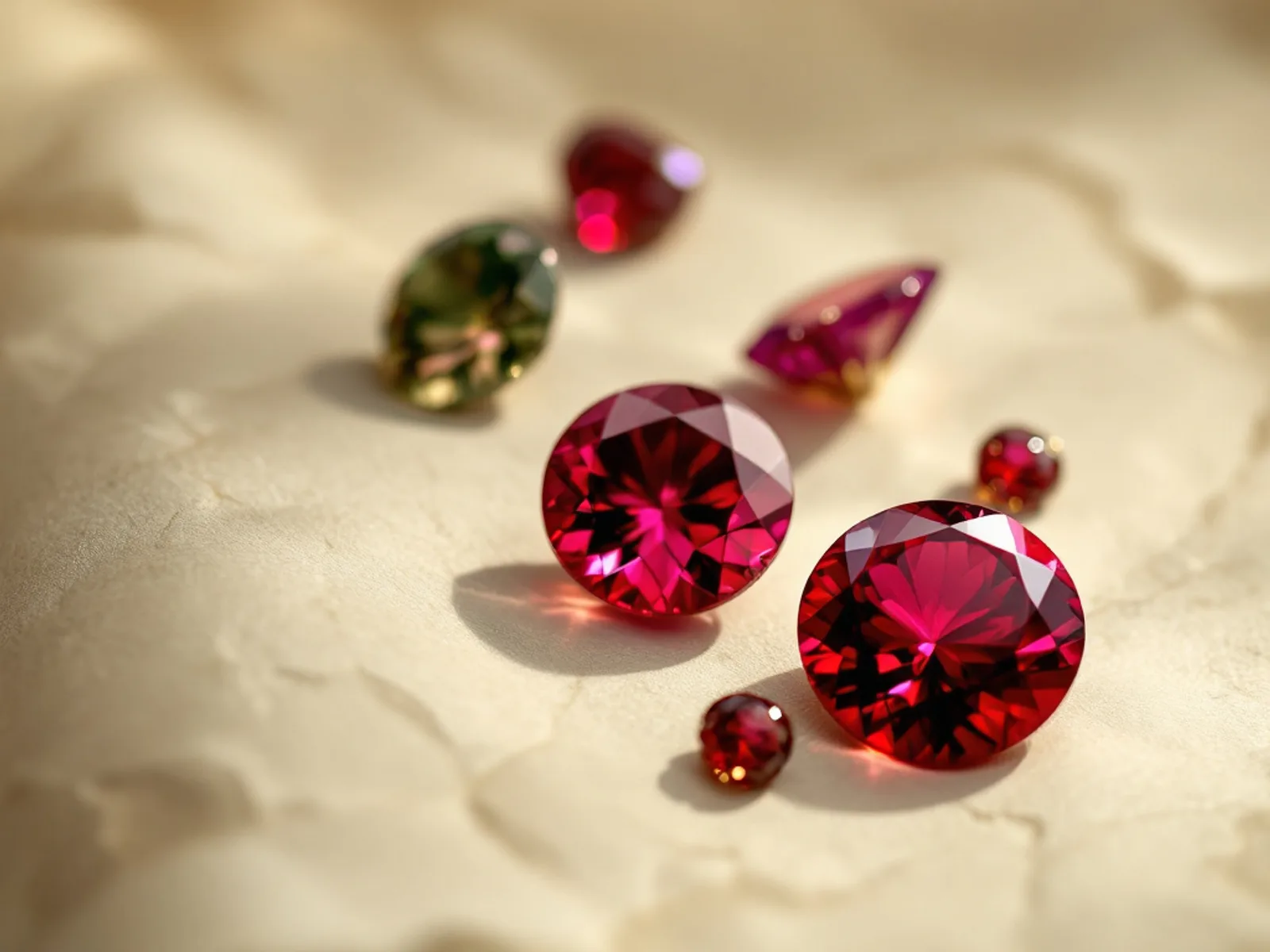
Kenya holds a singular place in the coloured stone trade as the home of tsavorite, the green grossular garnet that Campbell Bridges first found in 1967 and traced across the border to the Taita hills in 1971, and that Tiffany named in 1974 for the Tsavo national park next door. Alongside it the country produces ruby, sapphire and a range of garnets from the belt of metamorphic rock it shares with Tanzania. Below: the Taita workings, the ruby ground at Mangare, the Nairobi trade, what laboratories will and will not say about a Kenyan stone, and buying notes.
The Taita hills and the garnet belt
Tsavorite mining concentrates around Voi and the Taita hills in the south east, in small and medium scale operations working difficult ground: graphitic gneiss, narrow pockets, a lot of dead rock between them. Bridges' Scorpion mine is the best known name; he was killed there in 2009 in a dispute over the claim, which tells you something about the ground and about the value of what comes out of it. The same geological belt yields ruby near the Tanzanian border, colour change garnet, spessartite and iolite, and to the north the Baringo region gives a mostly opaque ruby that is cut as cabochons.
Nairobi is the commercial hub. Graded goods meet exporters and foreign buyers there, and a good deal moves on to Bangkok, Jaipur and Idar-Oberstein, which has bought East African garnet since the first parcels arrived. Export licensing in Kenya changes from time to time, and a dealer who buys in Nairobi rather than at the mine will usually know the current position better than the miner does.
Why tsavorite matters
Tsavorite delivers a saturated chromium and vanadium green without any routine treatment. Nothing is done to the stone. That gives it a straightforward honesty that heated corundum cannot claim, and it is why the stone attracts buyers who have grown tired of reading treatment lines. The trade wants vivid green of medium tone, neither the yellowish green of lighter stones nor the near-black of the overdark ones, and clean.
Size is the constraint. Clean stones above 3 ct are genuinely rare, because the crystals fracture during growth and most rough breaks into small clean pieces or large included ones. A 1 ct clean stone is a normal purchase; a 5 ct clean stone is an event, and priced like one. Fine tsavorite has appreciated steadily as supply from the narrow producing zone tightens, and there is no second belt anywhere else in the world producing at scale.
One caution on paperwork. Most laboratories identify tsavorite as grossular garnet, variety tsavorite, and confirm no indications of treatment. Few will state a country. Kenyan and Tanzanian tsavorite grew in the same rocks and cannot be separated reliably, so a Kenya origin claim is provenance from the dealer, not an opinion from a laboratory. Pay for the stone, not the flag.
Ruby at Mangare, and glass
The John Saul mine at Mangare, near Tsavo West, was found in 1973 and remains the name in Kenyan ruby; Rockland Kenya has worked it in recent decades. Most of what comes out is heavily included, purplish to strong red, and cabochon grade; a small share cuts into faceted stones with real colour. Heating is normal for the better facet rough.
Kenyan ruby, by contrast with the garnets, is often glass filled at the commercial level. Lead glass flowed into the fractures makes an opaque stone transparent and cheap. It changes both durability and value, since the glass is attacked by jeweller's acids and heat, and it demands unambiguous declaration as composite or glass-filled ruby. A laboratory report distinguishing filled from merely heated ruby is worth its cost on any significant stone. GIA, Gübelin, SSEF, GRS and AIGS all identify lead glass; most also give East Africa or Kenya as an origin opinion on ruby, based on inclusions and chemistry.
Sapphire is a smaller story: blue and fancy stones from Garba Tula in the north, mostly heated, mostly small.
Buying Kenyan stones
Ask for treatment in writing on everything, and on ruby ask specifically whether the stone is glass filled, heated, or neither. On tsavorite ask about clarity under magnification, since fine needles and feathers are normal and a seller's "eye clean" is a moving target. Ask where the parcel was bought and whether the dealer handled it in Nairobi or at source. For Kenyan goods the treatment line is the line between a garnet market of unusual integrity and a ruby market that requires care.
Buying through the register
The dealers listed on this page have had legitimacy, certification practice and disclosure checked. Ask for the laboratory report, have the treatment confirmed in writing, and use the declared treatments on each listing as your comparison before you make contact.
GemsVerified verifies dealers, not individual stones. The report from an independent laboratory tells you what the stone is.
Revendedores inscritos no registo
Ver tudo no diretório →

Perguntas e respostas
What stones come from Kenya?
Tsavorite from the Taita hills leads, with ruby from Mangare and Baringo, sapphire from Garba Tula, and spessartite, colour change garnet and iolite from the same metamorphic belt. Nairobi is where the goods are traded. See the verified dealers on this page for current availability.
Is tsavorite treated?
No. There is no routine treatment for tsavorite, and laboratory reports normally read no indications of treatment. That is a large part of its appeal. Kenyan ruby is another matter, often heated and at the commercial level often glass filled, so explicit declarations and an independent laboratory report remain important there.
Why is large tsavorite so expensive?
Because the crystals fracture as they grow, so most rough yields small clean stones or large included ones. Clean tsavorite above 3 ct is genuinely rare and a clean 5 ct stone is exceptional. Add a single narrow producing belt with no substitute source and the price of size follows.
Can a laboratory tell Kenyan tsavorite from Tanzanian?
Not reliably. Both grew in the same rocks and most laboratories decline to state a country for tsavorite; the report identifies grossular garnet, variety tsavorite, and confirms no treatment. A Kenya claim is dealer provenance. Buy on colour, clarity and the report, not on which side of the border the parcel is said to have crossed.
Is Kenyan ruby glass filled?
Much of the commercial material is. Lead glass fills the fractures in included ruby to make it transparent, and it must be disclosed as composite or glass-filled. It is damaged by heat and jeweller's acids. An independent laboratory report separates filled ruby from heated ruby every time; a seller's description does so only when it suits.