Verified Alexandrite dealers & buying guide
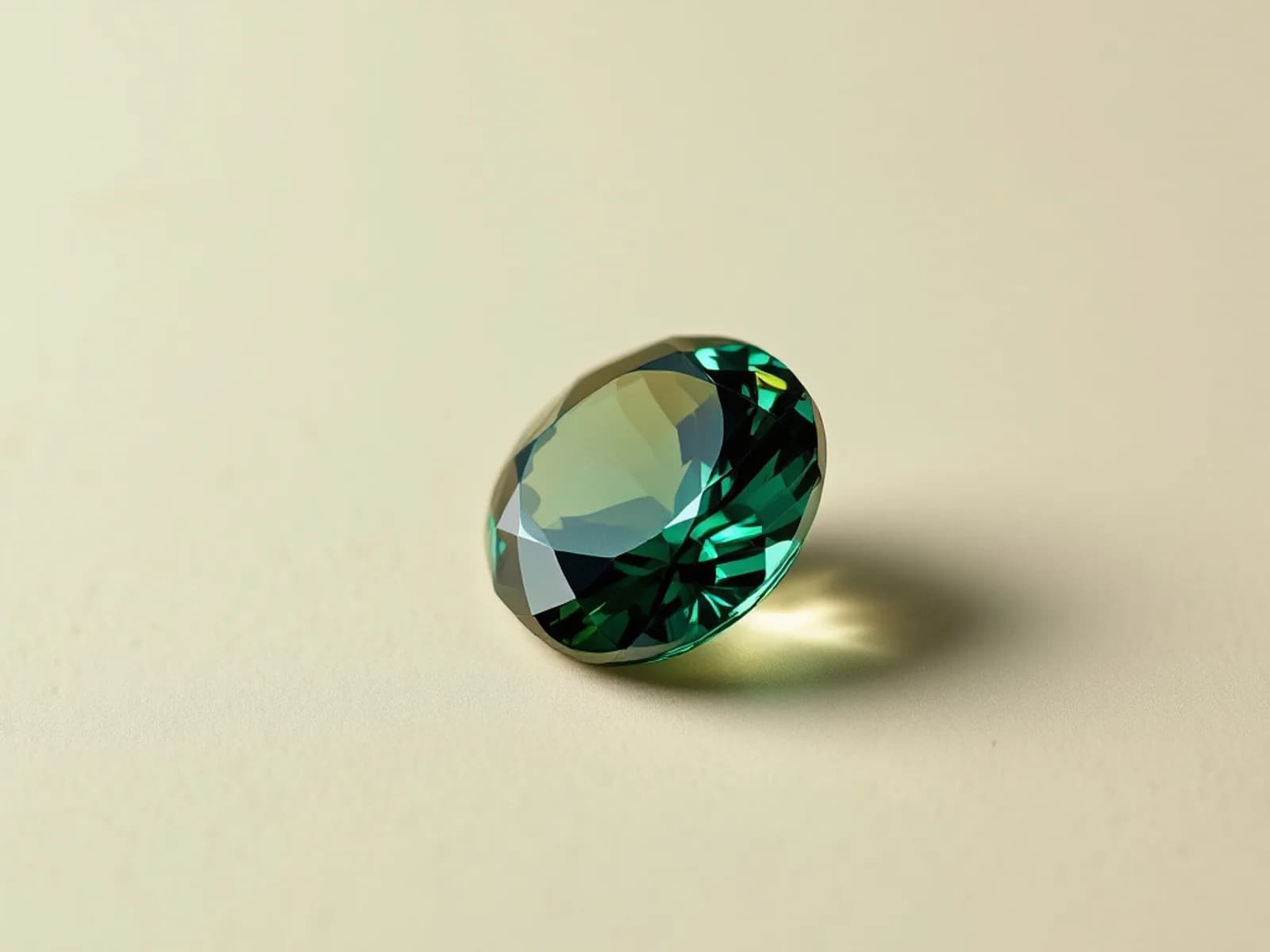
Alexandrite is the colour-change variety of chrysoberyl: green to bluish-green in daylight, red to purplish-red under incandescent light. It is among the rarest of the trade's mainstream stones, and it is almost never treated. The main risk to a buyer is not treatment but synthetic and imitation material sold as natural. This page covers how colour change is judged, the origins that matter, what laboratories report, what moves price, and how to buy.
Colour change and how it is judged
Chrysoberyl is beryllium aluminium oxide. A trace of chromium lets alexandrite pass green and red light almost equally, so the light source decides which the eye sees. Daylight and fluorescent light show green, bluish-green or teal. Candlelight, incandescent bulbs and warm LEDs show red, purplish-red or raspberry. The trade describes a stone by the strength of the change (weak, moderate, strong, complete) and by the two colours. "Emerald by day, ruby by night" is the classical phrase for the top Russian material, and very few stones live up to it. Most commercial alexandrite shows a greyish or brownish green shifting to a mauve or brownish red. Price falls fast as the change weakens or the colours turn muddy.
Look at the stone under a north-facing window or a daylight-balanced lamp, then under an incandescent bulb. Judge the change with the stone face-up. Mixed lighting shows both colours at once and can flatter a weak stone. Alexandrite is also strongly pleochroic, showing green, orange-yellow and red along different axes. A cutter orients the rough to give the best change face-up. Chatoyant (cat's-eye) alexandrite exists and is priced separately.
Where alexandrite comes from
The stone was found in the Ural Mountains of Russia in the 1830s and named after the future Tsar Alexander II. Russian material remains the reference for colour change. It is nearly worked out and appears mainly as antique jewellery and re-cut stones. Brazil, chiefly the Hematita deposit in Minas Gerais found in 1987, produced the finest modern stones with strong change and clean crystals. It has been the main source of large fine alexandrite since. Sri Lanka has produced alexandrite for a long time. Its stones are usually larger, with a weaker change, often greenish-brown to reddish-brown. India (Andhra Pradesh, Odisha) is a steady modern source, typically small and variable. Tanzania (Tunduru, Lake Manyara), Madagascar, Zimbabwe and Myanmar also produce it.
Origin affects price. Russian and Brazilian stones with strong change carry premiums. Gübelin, SSEF, GIA, AIGS and GRS offer origin opinions for alexandrite based on inclusions and trace elements. An origin opinion is exactly that: the laboratory's opinion, and two laboratories can differ.
Treatments and synthetics
Alexandrite is not routinely treated. Heat does not improve it, and there is no accepted enhancement in the trade. Laboratory reports for natural alexandrite generally state "no indications of treatment". Occasionally fracture-filled stones appear, and the report will say so.
The risk is synthetics. Synthetic alexandrite has been made by flux, Czochralski (pulled) and floating-zone methods since the 1970s. It shows a strong, clean change. It is a legitimate product when sold as synthetic, but it has been passed off as natural. More common still is synthetic colour-change corundum (sapphire) doped with vanadium. It has been sold since the early twentieth century as "alexandrite" in old jewellery and tourist markets. It shows a greyish-blue to purple change rather than green to red. Colour-change garnet and colour-change spinel are natural stones sometimes sold as alexandrite. None of these can be told from natural alexandrite by eye with certainty. A laboratory identification is the only sound basis for the purchase.
What laboratories report
A report should state species chrysoberyl, variety alexandrite, natural, colour under two light sources, and treatment (usually "none" or "no indications"). Origin opinion is offered by the major laboratories on request. For a stone of any value, insist on a report from GIA, Gübelin, SSEF, AIGS, GRS or Lotus. An in-house or unknown certificate is not enough. Check the weight, dimensions and photograph. Natural origin and treatment status come from that report, not from the seller's word.
What drives price and how to buy
- Strength and quality of colour change: a clean green to a clean red at the top.
- Saturation and absence of grey or brown in both colours.
- Size: fine alexandrite above one carat is scarce. Above three carats it is rare, and above five carats exceptional.
- Clarity: eye-clean stones command a premium, but the trade tolerates some inclusions in strong-change material.
- Origin, with Russian and Brazilian at the top.
Prices vary by an order of magnitude between weak-change commercial goods and strong-change fine stones of the same weight.
How to buy
Ask to see the stone under two light sources, and ask the dealer to describe both colours plainly. Ask the origin as the dealer knows it and whether a laboratory has given an origin opinion. Ask for the report and read the treatment line. Be suspicious of any large, very clean, strong-change stone at a modest price. That combination is what a synthetic looks like. Buy from dealers who handle alexandrite regularly and can account for a stone's provenance.
Watch for:
- Synthetic corundum or synthetic alexandrite sold as natural.
- Colour-change garnet sold as alexandrite.
- "Russian" origin claimed without a report.
- Colour change photographed under mixed lighting to look stronger than it is.
Buying through the register
Dealers on this page have been checked by GemsVerified for legitimacy, certification practice and disclosure. Ask for the laboratory report. Ask that natural origin and treatment status be stated in writing on the invoice, and keep the two together.
GemsVerified verifies dealers, not individual stones. The report is the record for the stone.
Dealers on the register
View all in directory →


Alexandrite by origin
Questions, answered
How can I tell if alexandrite is real?
Not by eye. Synthetic alexandrite, synthetic colour-change sapphire, colour-change garnet and colour-change spinel can all pass for it, and synthetic corundum was sold as "alexandrite" for a century. A gemmologist can separate them with instruments. For any stone of value you should have a report from an independent laboratory stating natural chrysoberyl, variety alexandrite.
Where does alexandrite come from?
Russia's Ural Mountains produced the original and still-reference material, now largely exhausted. Brazil (Hematita, Minas Gerais) has been the main source of fine modern stones since 1987. Sri Lanka, India, Tanzania, Madagascar, Zimbabwe and Myanmar also produce it, usually with weaker change. Origin affects price and should be confirmed by a laboratory origin opinion, not the seller's claim alone.
Is alexandrite treated?
Almost never. There is no accepted treatment that improves alexandrite, so laboratory reports normally read "no indications of treatment". Fracture filling is occasionally seen and would be stated. The concern with alexandrite is not treatment but substitution by synthetics and look-alikes, which is why an independent laboratory identification matters more than for most stones.
Why is alexandrite so expensive?
Fine alexandrite is rare. Chrysoberyl with enough chromium to change colour forms only where beryllium and chromium meet geologically, which is unusual. Strong green-to-red change, clean crystals and sizes above a carat or two are scarcer still, and Russian and Brazilian origin adds a premium. Weak-change commercial stones cost a fraction of strong-change fine ones of the same weight.
What should an alexandrite certificate say?
Species chrysoberyl, variety alexandrite, natural, with the colours observed under daylight and incandescent light and a treatment line (usually none). Origin opinion is available on request from GIA, Gübelin, SSEF, AIGS and GRS. Check the weight, dimensions and photograph match the stone, and prefer a recognised independent laboratory to a seller's own certificate.