India — dealers and sourcing guide
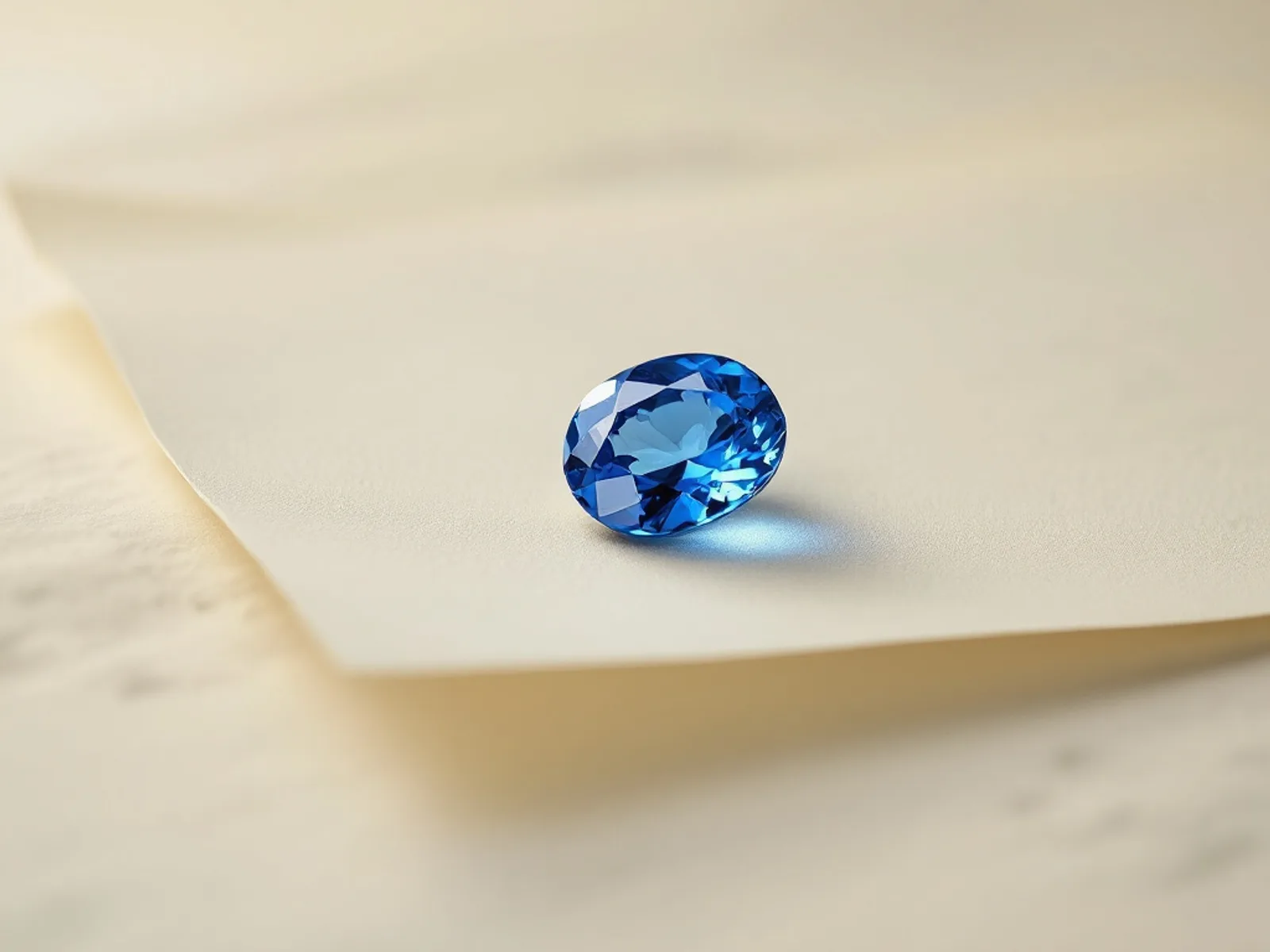
India is the source of the most valuable sapphire in the world. It is also one of the largest cutting and trading centres for coloured stones of every kind. Those two facts confuse buyers. A Kashmir sapphire is an origin claim that only a lab can support. 'Indian' on an invoice usually describes where a stone was cut or exported, not where it was mined. This page covers Kashmir sapphire and why it commands the highest premium of any sapphire. It also covers Jaipur as a cutting and trading capital, and the deposits of Odisha and the Karur belt. It ends with lab origin work and what 'Indian' means on paperwork.
Kashmir sapphire
Sapphire was found in 1881 near Sumjam in the Padar district of Kashmir, at over 4,000 metres. A landslide exposed crystals in weathered pegmatite in contact with marble and schist. The Maharaja's workings of 1882 to 1887, the old mine, produced almost everything that matters. Later working was sporadic, and the deposit has yielded little for decades. Every fine Kashmir sapphire on the market today is, in practice, an old stone.
The trade word is velvety. Kashmir blue is a saturated cornflower blue that keeps its colour in all lighting. A fine, milky silk of minute particles softens it by scattering light without dulling it. Nearly all Kashmir sapphire is unheated. The premium is a matter of rarity and reputation. An equal-looking Ceylon or Madagascar stone can sell for a fraction of the price. That gap is why the origin claim is worthless without a report. Auction houses often require reports from two labs, usually among Gübelin, SSEF, GIA and AGL. Older reports are commonly updated before sale.
Beware of colour words dressed up as origin. 'Kashmir colour', 'Kashmir-like' and 'Kashmir type' describe a look. Some fine stones from Bemainty in Madagascar and from Sri Lanka show it. Beware also of 'Kashmir ruby'. Ruby from Azad Kashmir on the Pakistani side is a different material from a different deposit. It carries no sapphire premium.
Jaipur, the cutting and trading capital
Jaipur has cut coloured stones since the city was founded in the eighteenth century. Today it is one of the largest lapidary centres in the world. It has long been the emerald cutting capital, working Zambian, Brazilian and Colombian rough. It also cuts a large share of the world's tanzanite, garnet, amethyst, tourmaline and citrine. Commercial ruby and sapphire, beads and carvings pass through it too. Johri Bazaar and the surrounding lanes hold thousands of dealers. Export goods leave for Bangkok, Hong Kong, the Gulf and the United States.
Two buying points follow. First, 'cut in Jaipur' says nothing about origin. 'Indian emerald' almost always means an emerald traded through Jaipur, not one mined in India. Second, Jaipur is where much of the world's emerald is oiled or resin-filled. Ask which filler was used and in what degree. Labs grade clarity enhancement as none, minor, moderate or significant. Resin is a permanent filler and should be disclosed separately from oil. Jaipur has a long-established gem testing lab of its own, and Mumbai hosts others. For origin and treatment on high-value stones, the international labs still carry more weight abroad.
Odisha, Karur and the other Indian sources
Odisha, formerly Orissa, is India's main producing state. The Kalahandi, Balangir and Nuapada districts yield chrysoberyl cat's eye and alexandrite, garnet, aquamarine and iolite. Their ruby and sapphire are mostly opaque and cut as cabochons or star stones. In Tamil Nadu, the Karur and Kangayam belt produces sapphire, opaque ruby, moonstone, iolite, garnet and sillimanite cat's eye. That material is traded through Karur and Coimbatore. Karnataka supplies opaque star ruby, Andhra Pradesh chrysoberyl, and Rajasthan low-grade emerald and garnet. Very little Indian corundum reaches fine grades. None of it should be confused with Kashmir.
Lab reports and what 'Indian' means on paperwork
Kashmir origin is one of the most consequential opinions a lab gives. Examiners look for the dust-like particle bands and the pattern of feathers. They look for the tourmaline, pargasite and zircon inclusions of the deposit. They confirm with trace-element chemistry against reference stones. The wording is an origin opinion, and reputable labs say so on the report. For Odisha or Tamil Nadu corundum, labs may say India or may not offer origin at all.
On paperwork, India is usually the country of last export or of cutting. Customs papers, invoices and even some certificates state it in that sense. Buying notes follow.
- Do not pay a Kashmir premium without a current report from an independent lab naming Kashmir. Ask for two reports on important stones.
- Ask whether 'Indian' refers to origin, cutting or export.
- For emerald bought through Jaipur, ask for the filler type and degree in writing.
- Confirm treatment on the report, not on the seller's description.
Buying through the register
The dealers listed on this page have had their legitimacy, certification practice and disclosure checked. Ask them for the laboratory report. Ask them to confirm treatment and origin in writing. Match the report to the invoice.
GemsVerified verifies dealers, not individual stones. Our review covers how a dealer works. The report from an independent laboratory tells you what the stone is.
Dealers on the register
View all in directory →No dealers are currently admitted for this page. The catalogue grows as dealers pass verification.
Questions, answered
Why is Kashmir sapphire so expensive?
Because the Padar deposit produced its important stones between 1882 and 1887 and has yielded little since, so supply is a fixed pool of old stones. The velvety cornflower blue is also the reference colour for sapphire. Rarity and reputation together create the highest origin premium in sapphire, and only a laboratory report can support the claim.
Are Kashmir sapphires still mined?
Not in any meaningful quantity. Sporadic work in the twentieth century produced little of note, and the mines at over 4,000 metres are inaccessible for most of the year. Almost every Kashmir sapphire offered today has come from an older collection or a previous sale, which is why provenance and updated reports matter.
How is Kashmir origin proven?
By an independent laboratory, not by the seller. Examiners look at the characteristic bands of fine particles, the inclusion suite and the trace-element chemistry, and compare them with reference stones. The result is an origin opinion. For important stones the trade generally expects reports from two laboratories such as Gübelin, SSEF, GIA or AGL.
What does 'Indian emerald' mean?
Almost always an emerald cut or traded in Jaipur, which handles Zambian, Brazilian and Colombian rough. India mines a little low-grade emerald in Rajasthan, but it rarely enters the fine market. Ask for the mine origin and the clarity-enhancement grade on a laboratory report, and confirm whether the filler is oil or resin.
Are Indian rubies and sapphires good?
Mostly commercial. Odisha, Karnataka and the Karur belt in Tamil Nadu produce ruby and sapphire that is largely opaque and cut as cabochons or star stones, plus good chrysoberyl cat's eye and alexandrite. None of it is Kashmir. Treat 'Indian sapphire' as a different product from 'Kashmir sapphire' and price it accordingly.