Verified Aquamarine dealers & buying guide
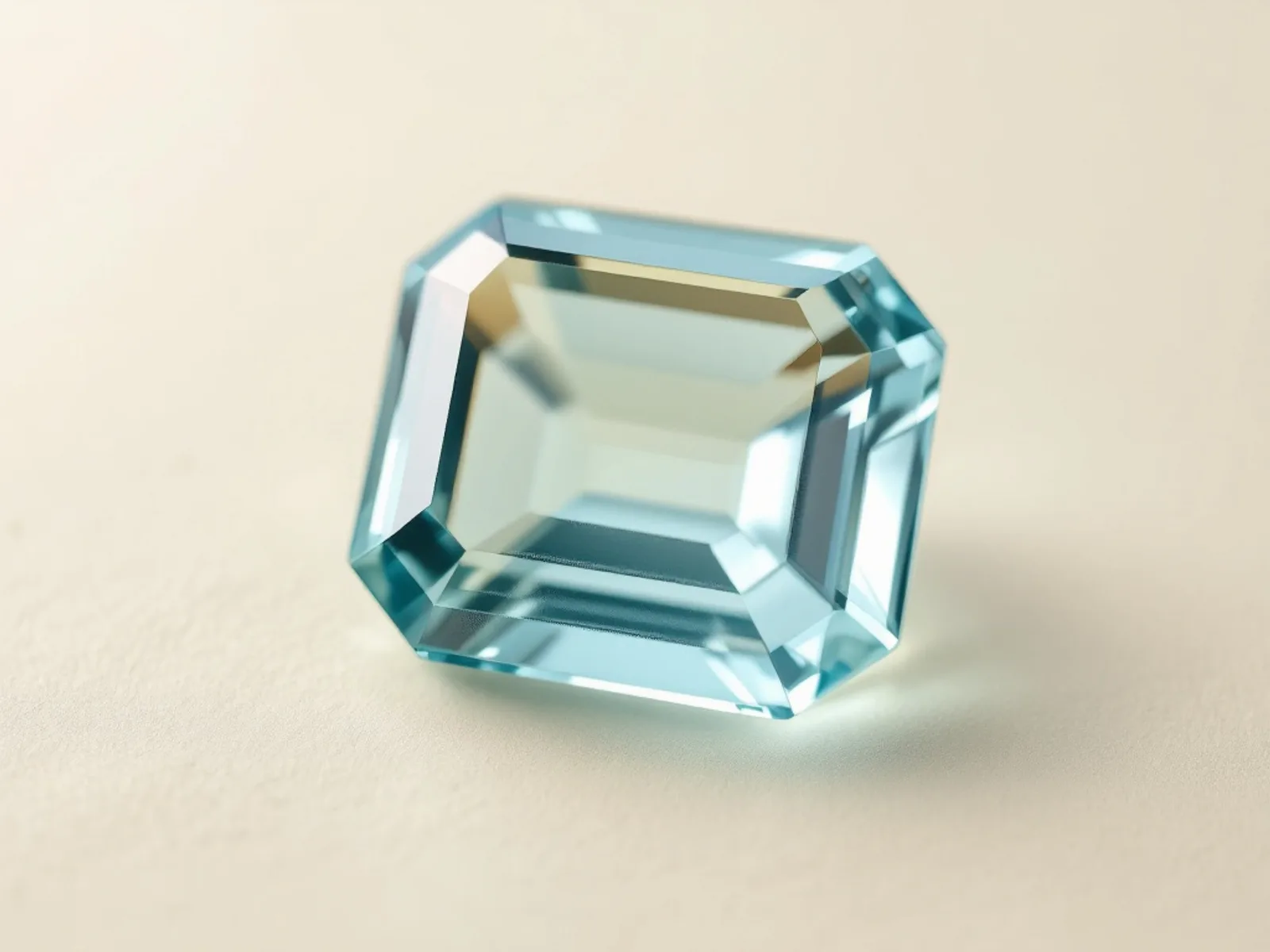
Aquamarine is blue beryl, cousin to emerald and morganite, and it is heated as a matter of course. Nobody in the trade minds, and nobody can prove it either way. That second point is where most of the muddle lives. Below: the colour terms, where the material comes from and why that hardly moves the price, what heat does and what a report will and will not say about it, and the substitutes that do the real damage.
The colour ladder, and what "Santa Maria" is not
Iron colours it. Ferrous iron gives the blue; ferric iron adds a yellow the eye reads as green, and taking that yellow away is what cutters, heaters and buyers have all been chasing for a century.
"Santa Maria" is the word at the top of the ladder and it is misused daily. It comes from the Santa Maria de Itabira mine in Minas Gerais, which in its day gave a deep, saturated blue without a trace of grey. The name lives on, applied to any stone of that saturation from anywhere, so when a dealer says "Santa Maria colour" they are describing the stone, not its passport. "Santa Maria Africana" was coined in the 1990s for comparable Mozambican goods; the trade uses it without embarrassment and nobody pretends it is Brazilian.
Most aquamarine offered anywhere is pale, clean and pleasant, and pale is the operative word. Saturation drives price. A 3 ct stone with real colour will outsell a 15 ct washed-out one per carat and often outright. Grey is the enemy. A touch of green is tolerated, and some buyers, ourselves included, rather like it in a large stone. Cutters give aquamarine deep pavilions to hold what colour there is; below about 5 ct it seldom shows convincing blue.
Sources, briefly
Brazil, first and for a long time only. Minas Gerais (Teófilo Otoni, Pedra Azul, Marambaia) and Espírito Santo have produced big clean crystals since the nineteenth century, and the Dom Pedro, the 10,363 ct obelisk that Bernd Munsteiner cut in Idar-Oberstein, came out of Pedra Azul. Then Africa: Mozambique for the "Africana" grade, Nigeria (the Jos Plateau, often small but well saturated) and Madagascar. Pakistan, Afghanistan, Vietnam, Zambia and the Urals fill in. All of it grows in pegmatites, alongside tourmaline and topaz.
Origin adds almost nothing to the price. That is unlike ruby, sapphire or emerald, where a country name can double the figure. A few laboratories will give an opinion if pressed; most reports do not carry one and hardly anybody asks.
Heat, and the claim that cannot be made
Nearly every aquamarine has been through a low oven, somewhere around 400 to 450 degrees Celsius, to convert the ferric iron behind the yellow-green cast. The change is permanent. It needs no aftercare. And, this is the point, it leaves nothing that standard testing can find, so the trade treats heat as routine and there is no discount for it.
The corollary catches people out. If heat cannot be detected, "no heat" is not a finding a laboratory can make for aquamarine, however grand the letterhead. A dealer who calls an aquamarine unheated is vouching for a supply chain, not quoting a report. Greenish stones are more likely to be untreated, granted. Do not pay for that. Some very pale material has been irradiated to deepen the blue; it is uncommon, and the colour tends to fade in daylight, so ask.
The real hazards are substitutes. Synthetic spinel and plain glass are made in aquamarine blue, and treated blue topaz has been passed off as aquamarine at retail for decades. Anything above a few carats deserves a report confirming natural beryl.
On the report
GIA, Gübelin, SSEF, AIGS, GRS and Lotus will all identify natural beryl and describe the colour. Most stay silent on heat. Some write that heating cannot be excluded, which is the honest formula. For most stones a report from any recognised laboratory naming natural aquamarine is enough; the premium names earn their keep on large exceptional stones, not on a 4 ct commercial oval.
Price, and buying without being caught
Saturation first, Santa Maria at the top and sky blue at the bottom. Then absence of grey, and, for most tastes, limited green. Clarity: aquamarine is expected to be clean under a lens, so an inclusion costs more here than it would in emerald. Size moves the price slowly, because big clean stones exist, until you want strong colour above 20 ct, which is scarce. Cut last. A window (a see-through centre) is common in commercial goods and worth a discount.
Ask the dealer where they believe it came from and whether it has been heated; expect "yes" or "assumed heated", and any other answer needs explaining. Compare colour in daylight against white card, never under the shop spotlights, which flatter pale stones shamelessly. If "Santa Maria" is used, ask to see the stone beside one of known grade. Cat's-eye aquamarine and the deep-blue Maxixe type, first found in 1917 and notorious for fading, are specialist material and should always travel with a report.
Watch for blue topaz or synthetic spinel sold as aquamarine; "Santa Maria" pinned to anything blue; "untreated" with nothing behind it; and photographs saturated well past what the stone shows in the hand.
Buying through the register
Every dealer listed on this page has had legitimacy, certification practice and disclosure checked by GemsVerified. Ask them for the laboratory report, and ask that treatment be written on the invoice; for aquamarine, "assumed heated" is the honest wording, and a dealer who writes it is doing you a favour.
GemsVerified verifies dealers, not individual stones. What any particular stone is remains a question for the independent laboratory report.
Dealers on the register
View all in directory →










Questions, answered
Is aquamarine heated?
Yes, nearly always, and at a low enough temperature that it leaves no trace. The purpose is to strip the yellow-green cast and leave a cleaner blue; the result is permanent. Because no laboratory can detect it, the trade treats heat as routine, gives no discount for it, and does not pay a premium for an unheated claim either, since nobody can prove one.
What is Santa Maria aquamarine?
A colour grade, not an origin. It means deep, saturated, pure blue with no grey, named after the Santa Maria de Itabira mine in Brazil that first produced it. The term is now used for stones of that colour from Mozambique, Nigeria and anywhere else. Ask what the seller means by it and put the stone beside a known Santa Maria before paying the premium.
Where does the best aquamarine come from?
Brazil, historically and still; Minas Gerais and Espírito Santo set the reference. Mozambique, Nigeria and Madagascar are the main sources now, with Pakistan, Afghanistan and Vietnam behind them. Origin has little effect on price compared with colour, clarity and size, and most reports do not state it. If origin matters to you, get it from a laboratory report rather than the seller's description.
How can I tell aquamarine from blue topaz?
Not by eye, honestly. Blue topaz tends to be a brighter, more even blue and is heavier for its size, but the two are separated by refractive index and specific gravity, which takes a gemmologist's instruments. For any stone of value, ask for an independent laboratory report stating natural beryl (aquamarine) rather than trusting the label.
Does aquamarine need a certificate?
Small commercial stones, usually not. Anything above a few carats, or of fine Santa Maria colour, should carry an identification report from a recognised independent laboratory confirming natural beryl. The report will not normally comment on heat, because heat cannot be detected in aquamarine, but it will rule out glass, synthetic spinel and topaz, which is what you are paying it to do.