Tanzania — dealers and sourcing guide
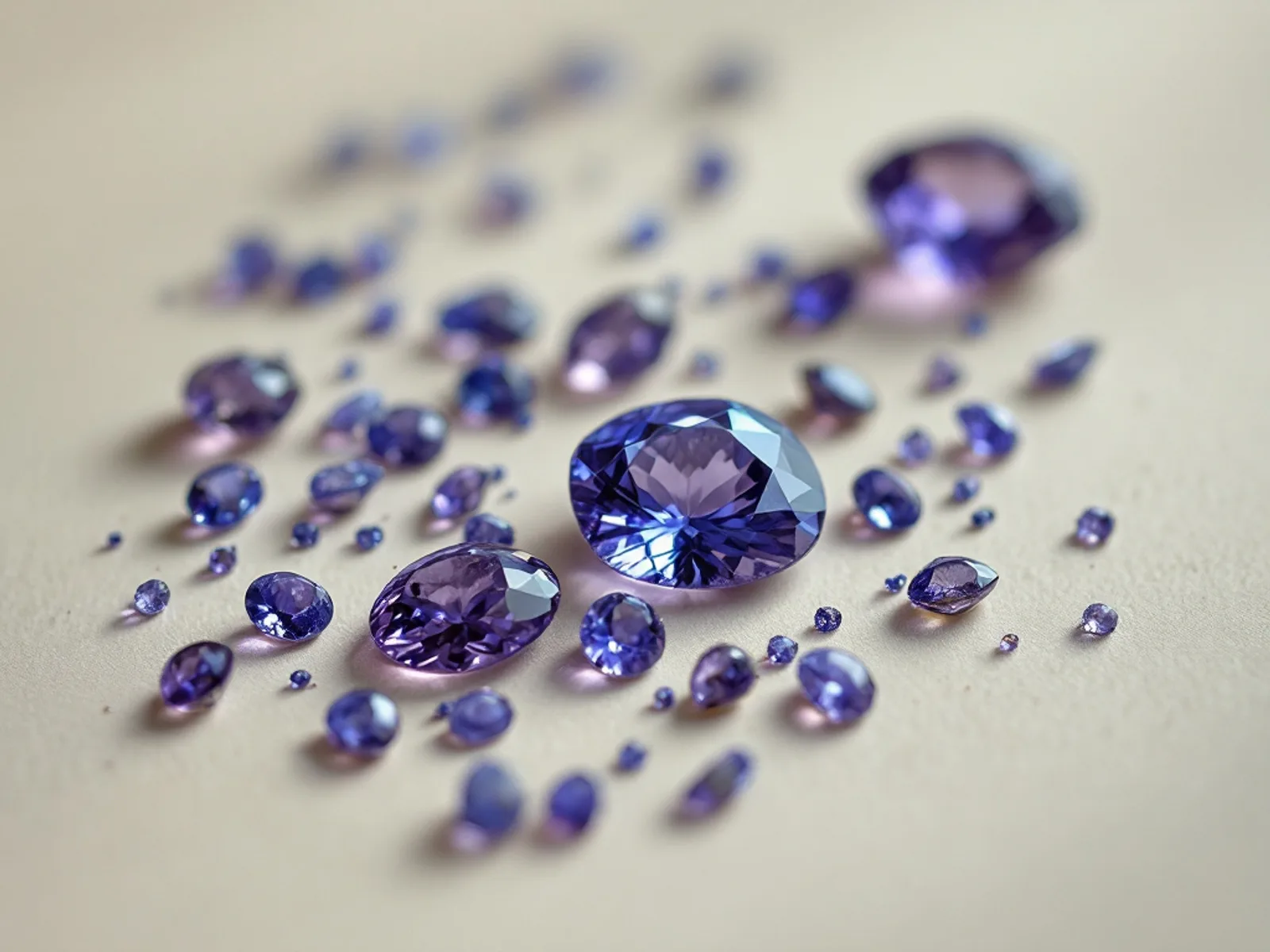
Tanzanite comes from one hillside. Everything else Tanzania produces comes from a scatter of deposits that would take a week to drive between: sapphire from Tunduru, Songea and the Umba valley, spinel from Mahenge, tsavorite from the Merelani foothills, and a ruby rush at Winza that flared in 2007 and faded within a couple of years. No country has added more new gem sources to the trade since 1960. Nearly all of it goes through Arusha sooner or later. What follows takes the deposits one at a time, says what treatment to expect from each, explains how a laboratory approaches Tanzanian origin, and finishes with the questions we would put to a dealer.
Merelani and tanzanite
Tanzanite is zoisite, blue to violet, and it comes from the Merelani Hills below Kilimanjaro and nowhere else that anyone has found in commercial quantity. The government divides the ground into blocks lettered A to D. Discovery was 1967. Heating has been standard practice from the start, because most of the rough comes out brown and a furnace at around 600 degrees turns it blue. The trade shrugs at this. Laboratories generally note that heating is routine rather than treat it as a defect, and unheated blue, though it exists, is rare and awkward to prove.
Cut matters more here than in most stones. Tanzanite is trichroic, meaning it shows blue, violet and a burgundy tone depending on direction, so the cutter chooses the face-up colour when orienting the rough. Deep saturated blue with a violet flash sits at the top. Lavender is plentiful and priced like it. "AAA" and similar grades are seller words; no laboratory uses them. Watch for the occasional coated stone. And bear in mind that tanzanite is soft for a ring and has a cleavage. Wear, not treatment, but you would want to know.
Sapphire from the south, and Umba
Tunduru sits in the far south near the Ruvuma river, an alluvial field opened in the mid-1990s that gives sapphire in almost every colour, along with chrysoberyl, spinel and garnet. Sizes mostly under 2 ct. Clarity high. A useful share unheated, which is the point. Songea to the west is a different proposition. Its sapphires are small, blue-green, orange or red, nearly always heated, and Songea rough fed much of the beryllium-diffused orange and yellow that appeared around 2001 and embarrassed a number of dealers. Winza, near Dodoma, had a brief flare of unheated ruby and sapphire from 2007. It has gone quiet.
The Umba River valley near the Kenyan border has been worked since the 1960s. It gives sapphire in orange, purple, colour-change and padparadscha-like shades, plus rhodolite and malaya garnet. Umba stones sold as padparadscha very often fall outside the colour range a laboratory will accept. Ask what the report says. On any Tanzanian sapphire, the treatment line matters more than the district name.
Mahenge spinel and tsavorite
Mahenge, in the Morogoro region, produced a run of large hot pink and red spinel crystals from 2007. Some weighed kilograms. "Mahenge spinel" became a colour reference in its own right, and prices climbed partly because spinel is normally untreated. Laboratories now check it for heat regardless. Ask that they did.
Tsavorite is green grossular garnet, coloured by vanadium and chromium, first found at Lemshuko near Merelani in 1967 and later over the Kenyan border. Nobody treats it, so the report question is identity and, if you want it, origin. Clean stones above 2 ct are scarce and priced to match. Paler material is sold as mint garnet. Mint garnet is not tsavorite, whatever the label says.
Arusha, export rules and origin
Arusha is the hub. Licensed brokers and dealer offices there serve Merelani and the wider country, and Dar es Salaam handles export. Tanzania restricts export of rough above set sizes and requires licences and government trading centres for local dealing, which means buying informally from a miner is unlawful for a visitor however friendly the miner. Much Tanzanian rough is cut in Bangkok, Jaipur and Sri Lanka. Arusha also sees material from Kenya, Mozambique and Madagascar, so a stone bought there is not automatically Tanzanian.
Tanzanite needs no origin call. For sapphire, GIA, Gübelin, SSEF, AIGS, GRS and Lotus compare inclusions, trace-element chemistry and spectra with reference stones. Small East African sapphires overlap with Sri Lanka and Madagascar often enough that a report may give no origin at all. Spinel origin, where offered, separates Mahenge from Myanmar and Vietnam on chemistry. Origin is an opinion. Treatment is usually the line that moves the price.
Buying notes
Ask whether the stone is heated and which laboratory has seen it. If it is orange or yellow, ask whether anyone checked it for diffusion. A shrug is an answer too. What we see misrepresented most often: heated Songea sold as unheated Tunduru, beryllium-diffused stones sold as merely heated, coated tanzanite, mint garnet passed off as tsavorite, and sapphire from over the border sold as Tanzanian because it sounds better.
Buying through the register
Every dealer listed on this page has had legitimacy, certification practice and disclosure checked by GemsVerified. That check covers how a dealer operates. It does not extend to the stones in any one parcel.
Ask for the laboratory report on anything significant. Have treatment status confirmed in writing on the invoice. GemsVerified verifies dealers, not individual stones.
Dealers on the register
View all in directory →





Questions, answered
Where is tanzanite mined?
One hillside: the Merelani Hills near Kilimanjaro in northern Tanzania, worked in government-defined blocks since the 1967 discovery. Nobody has found a commercial deposit anywhere else, which is why origin never appears as a question on a tanzanite report. Rough trades through Arusha, and the export rules keep a good deal of the cutting inside the country.
Is tanzanite heated?
Nearly all of it. The rough comes out of the ground brown, goes into a furnace at around 600 degrees, and comes out blue to violet. The trade treats that as standard rather than as a treatment that knocks value off. Unheated blue tanzanite exists, is rare, and is hard to prove; a claim of no heat wants an independent laboratory report behind it, not the seller's say-so.
Are Tanzanian sapphires heated?
Depends where they came from. A useful share of Tunduru sapphire is unheated. Songea material is almost always heated and was widely used for beryllium diffusion in the early 2000s. The deposit name on its own tells you nothing certain; a report from GIA, Gübelin, SSEF, AIGS, GRS or Lotus is what establishes heat or diffusion.
What is Mahenge spinel?
Spinel from the Mahenge area of Morogoro region, best known for the run of large hot pink and red crystals found from 2007. It is normally untreated, and it has become a colour reference in the trade, which is a polite way of saying it is expensive. Laboratories now check spinel for heating anyway, so ask for the report rather than assuming.
Can I buy gemstones in Arusha?
Yes, through licensed dealers and government trading centres. Buying informally from miners is unlawful for visitors and export of larger rough is restricted, so do not be talked into either. Arusha also handles stones from Kenya, Mozambique and Madagascar, meaning what you buy there is not automatically Tanzanian. Ask for a laboratory report and proper export documents.