Verified Topaz dealers & buying guide
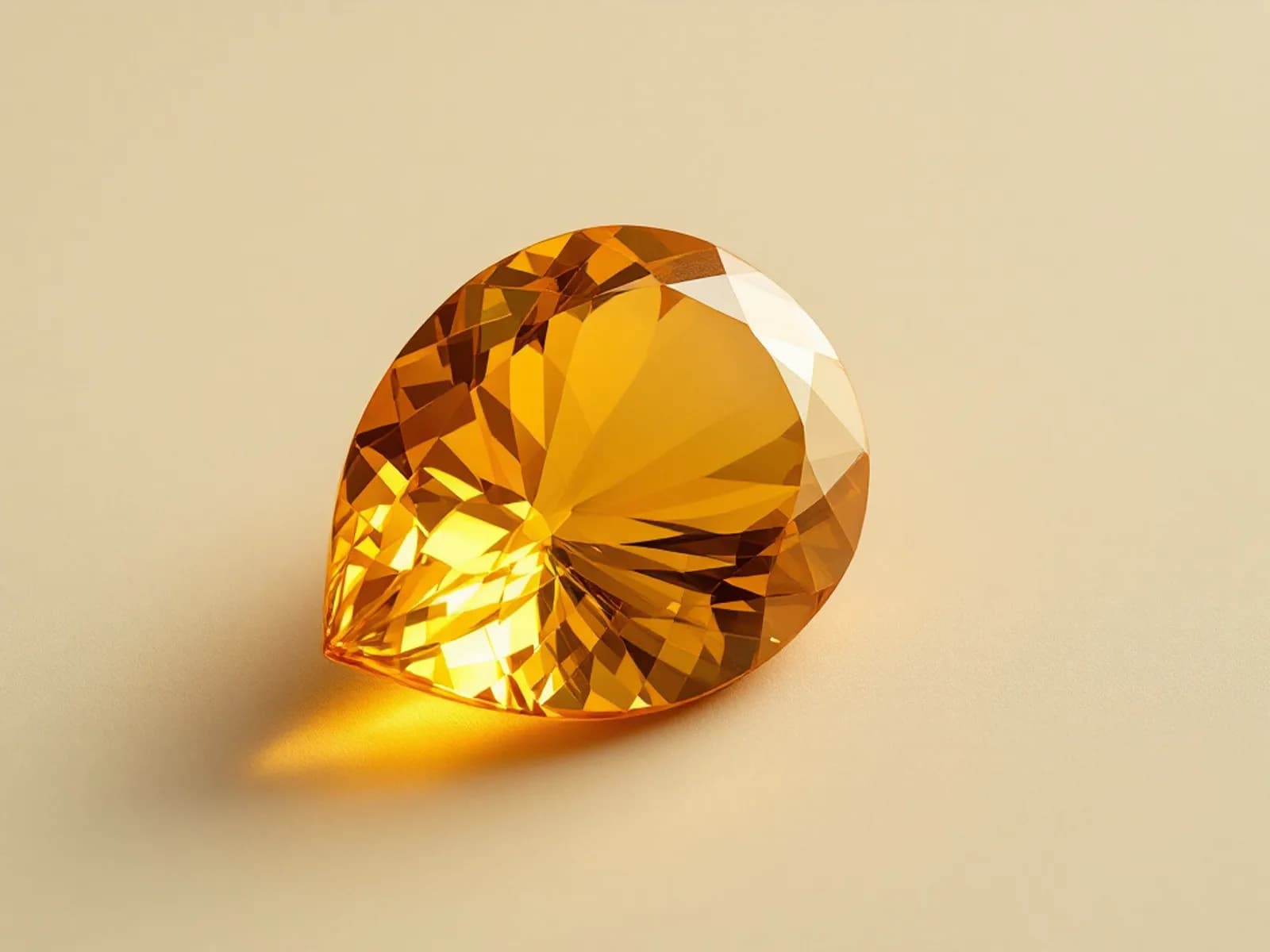
Topaz is two markets wearing one name. Imperial topaz is the golden-orange to pinkish-orange stone from Ouro Preto in Brazil: rare, mostly untreated, priced accordingly. Blue topaz is sold by the tonne, starts life colourless and is given its colour by irradiation and heat. Confusing the two is how people overpay. What follows keeps them apart: the colour words, the treatments and how they are disclosed, what a laboratory will and will not say, what moves price, and how to buy each.
Imperial topaz and its colour words
Topaz is an aluminium fluorosilicate. It grows in pegmatites and granite cavities and, at Ouro Preto, in weathered veins. Most of it comes out colourless, pale blue, brown or yellow. "Imperial" is a trade term with no agreed laboratory meaning. Used strictly, it means the reddish-orange to pinkish-orange stones of the Ouro Preto district in Minas Gerais. Used loosely, it means any golden or orange topaz, and you will hear it used loosely. Dealers grade the colour as sherry, golden, peach, orange, pink and red, and price climbs in roughly that order. Natural pink and red are the rarest. Some pink imperial topaz is produced by heating orange-brown Ouro Preto rough; that is heated, and should be sold as heated. Pink topaz from Katlang in Pakistan is a separate small source.
The Ouro Preto mines, Capão, Vermelhão and a few others, are the only significant source of imperial topaz. Small amounts of orange and pink material come from the Urals and Pakistan. Origin opinion is seldom sought because Ouro Preto is assumed; what a laboratory can usually confirm is natural colour, and that is what you want.
Blue topaz: irradiated, heated, and cheap
Nearly all blue topaz began colourless. It is irradiated, by electron beam, gamma rays or neutrons, then heated, and the result is a stable blue that will not shift. The trade names describe depth only: sky blue (light), Swiss blue (bright medium), London blue (dark, slightly greenish or inky). Natural blue topaz exists but is pale and uncommon. Treated blue comes in any size you like at a price to match.
Neutron-treated material can stay faintly radioactive for a time. In most markets it must be held until it falls below legal limits, and reputable supply chains do exactly that; the material is safe once released. It is one more reason to buy from a dealer who can say where a parcel came from.
Other things done to topaz: "mystic" and rainbow stones carry a thin metallic coating that scratches off, and are sold as coated. Diffusion has produced some surface blue-green. Colourless topaz is sold as "white topaz" as a diamond stand-in; natural, and worth little. Brown topaz from some deposits fades in light, which is why "sherry" stones from Ouro Preto that hold their colour are prized.
Sources, and what a laboratory will say
Brazil (Minas Gerais) supplies the imperial and vast quantities of colourless rough for treatment. Sri Lanka, Nigeria, Pakistan, Russia, Myanmar, Mexico, the USA (Utah, Texas) and Namibia produce topaz in various colours. For blue, origin has no bearing on price at all. For imperial, Ouro Preto is the only name that matters.
On the report
GIA, Gübelin, SSEF, AIGS, GRS and Lotus identify topaz and describe colour. For imperial topaz the report should say natural topaz and whether heat is indicated. For blue topaz most write "irradiated and heated" or simply "treated", and some decline to test small commercial goods at all. Coating and diffusion are stated when found. Origin opinion for imperial topaz is available on request and rarely priced in. One caution: treated blue cannot always be separated from the rare natural blue by standard testing, so a laboratory will not usually confirm "natural blue" without advanced work. Treat a seller's claim of natural blue with suspicion until it is on paper.
Price and buying
For imperial topaz: colour first, pink and red at the top, then reddish orange, golden orange, yellow. Saturation and the absence of brown. Size, since clean stones above 5 ct in fine colour are scarce, and because the crystals are long, most are cut as elongated ovals and cushions. Clarity, with eye-clean expected though veils and liquid inclusions occur. Origin, Ouro Preto assumed and stated on the report where possible.
For blue topaz, price is size and cut, with London blue a little above Swiss and sky. Ranges between the two markets are not comparable and should not be quoted against each other.
Buying imperial: ask if it is Ouro Preto material and whether it has been heated; pink stones often are. Ask for a report on anything of size. Look for orange with a pink or red flash rather than a flat yellow. Topaz has perfect basal cleavage, so ask about cut and setting for a ring. Buying blue: assume irradiated and heated and expect the invoice to say so; do not pay for "natural blue" without a laboratory statement; treat mystic and rainbow goods as coated.
Watch for yellow citrine or yellow quartz sold as "topaz", an old abuse that refuses to die; treated blue sold as natural; and orange topaz from elsewhere sold as imperial without a report.
Buying through the register
The dealers on this page have had legitimacy, certification practice and disclosure checked by GemsVerified. Ask for the laboratory report on imperial topaz. Have the invoice state the treatment (heated, irradiated and heated, coated, or none), and keep report and invoice together.
GemsVerified verifies dealers, not individual stones. The laboratory report is the record for the stone.
Dealers on the register
View all in directory →

Questions, answered
Is blue topaz natural?
The topaz is; the colour almost never is. Nearly all blue topaz is colourless topaz that has been irradiated and then heated to give a stable sky, Swiss or London blue. Natural blue exists but is pale and uncommon, and standard testing cannot always tell the two apart, so a claim of natural blue needs an independent laboratory statement, not the seller's say-so.
What is imperial topaz?
A trade term rather than a laboratory definition, for the golden-orange to pinkish-orange and pink topaz mined around Ouro Preto in Minas Gerais, Brazil, the only significant commercial source. Price rises from yellow through orange to pink and red. Some pink imperial topaz is produced by heating orange-brown material and should be sold as heated.
Is irradiated blue topaz safe to wear?
Yes, once released for sale. Neutron-irradiated topaz can carry residual radioactivity and is held under regulatory control until it decays below set limits; electron-beam and gamma treatment do not raise the same issue. Established supply chains follow these rules. Buy from a dealer who can say where the material came from and how it was treated.
Where does imperial topaz come from?
Almost entirely the Ouro Preto district of Minas Gerais, Brazil, from mines such as Capão and Vermelhão. Small quantities of orange and pink topaz come from the Urals and from Katlang in Pakistan. Because Ouro Preto is assumed, origin is rarely stated on reports; what a laboratory report should confirm is natural topaz and whether the stone has been heated.
What is the difference between topaz and citrine?
Different minerals altogether. Topaz is an aluminium fluorosilicate, harder (Mohs 8) and denser; citrine is yellow quartz (Mohs 7) and far cheaper. Yellow quartz has been sold as "topaz", "gold topaz" or "Madeira topaz" for a century, and it is a misrepresentation every time. Ask the seller to put the species on the invoice and, for a stone of value, get a laboratory identification.