Verified Tsavorite dealers & buying guide
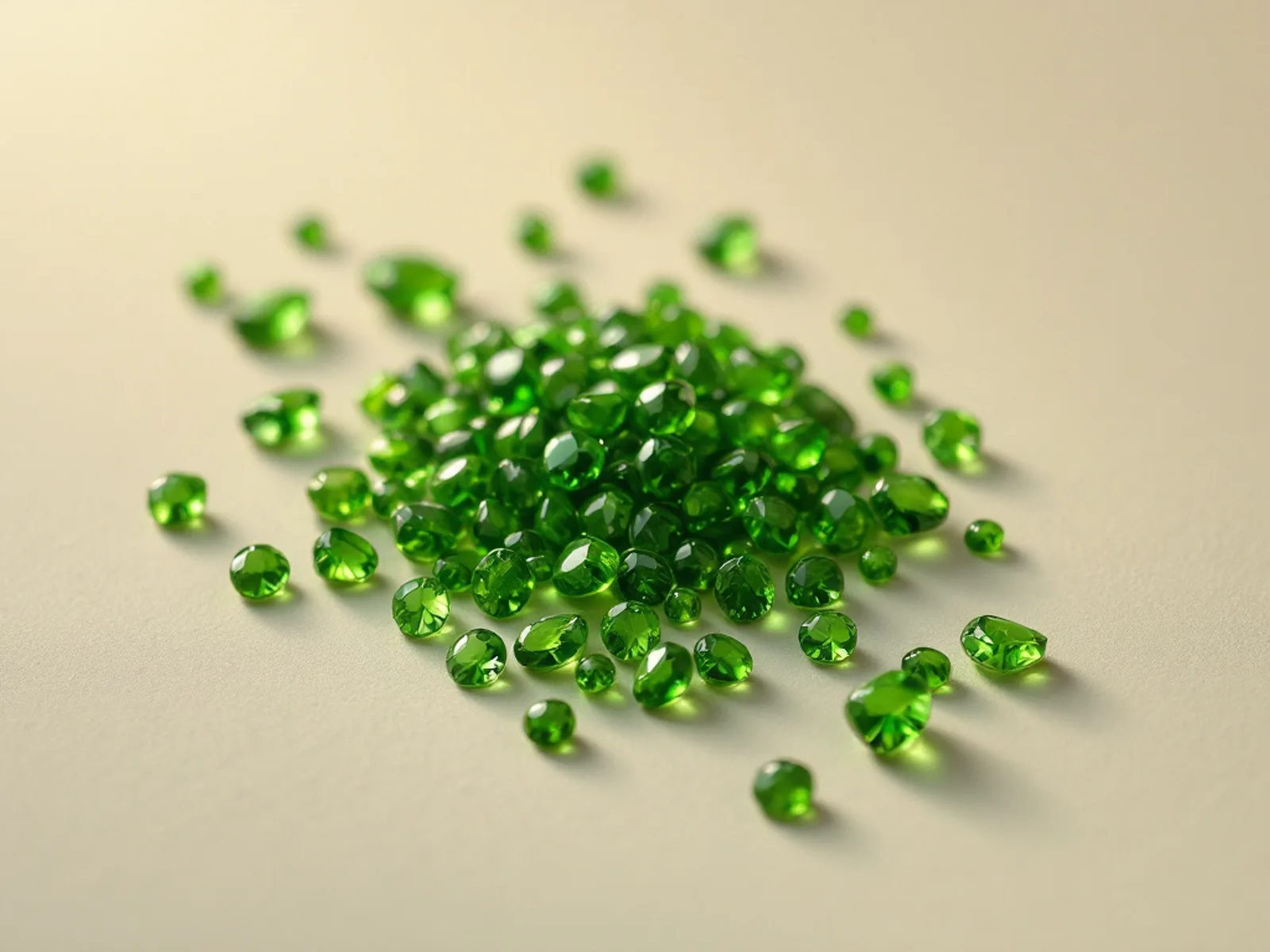
Tsavorite is green grossular garnet from the Kenya-Tanzania border, coloured by vanadium with some chromium. Nobody heats it, oils it or fills it in the ordinary run of trade, which makes it one of the very few green stones you can buy without a treatment conversation. What you pay for is colour and size, and a clean stone over a few carats is hard to find. What follows: the colour words and where the name stops, the deposits, why "untreated" is the default rather than a boast, what a report says, what moves price, and how to buy.
Colour, and where tsavorite stops being tsavorite
Grossular is calcium aluminium silicate. The green vanadium-bearing sort was christened tsavorite by Tiffany & Co in 1974, after Tsavo National Park, and the name stuck. Colour runs from light yellowish green through pure green to a deep, slightly bluish green. The trade wants that last one in a medium tone; too dark and it goes flat, too pale and it becomes something else. Fine tsavorite gets compared with emerald, and in a well-cut 2 ct stone the comparison is fair.
Where the name stops is the point buyers miss. Pale grossular from Tanzania is "mint garnet" or "Merelani mint", a pleasant stone with its own price, and it should not be called tsavorite. Yellow-green material trades as "green grossular" and cheaper still. No laboratory draws the line; a report says "grossular garnet, green" and may add tsavorite as a trade name. So "top green", "chrome green" and "AAA" are the seller's words, and one seller's AAA is another's stock green.
The deposits
Campbell Bridges found it in Tanzania in 1967 near Lemshuko, then in Kenya in 1971 in the Taita-Taveta district. Both sides sit on the same metamorphic belt and produce the same material: on the Kenyan side the Taita Hills, Kuranze and Mgama Ridge; on the Tanzanian, Merelani, Lemshuko, Komolo and Ruangwa. Madagascar contributes a little. Green grossular from other places is not usually called tsavorite. The rough goes through Nairobi and Arusha, then Bangkok, Jaipur and Idar-Oberstein.
Origin does nothing to price here. Kenya or Tanzania is the whole story, laboratories rarely bother with an origin opinion for tsavorite, and separating the two has no commercial meaning. What does move price is politics: a mining or export halt in either country tightens supply for a season and dealers reprice accordingly.
Untreated, and why that is not a selling point
Heat does not improve garnet. Oil does nothing for it. Nobody diffuses or irradiates it. So reports from GIA, Gübelin, SSEF, AIGS, GRS and Lotus read "no indications of treatment" for tsavorite as a matter of course, and it would be odd to pay extra for what every stone has. Fracture filling has been seen now and again in heavily included goods, and a report will say so. Glass and synthetic garnet imitations exist but are rare. The likelier mistake is a chrome tourmaline or a green zircon sold as tsavorite, or, more often, pale grossular sold as the fine article.
On the report
Species grossular, variety green (tsavorite), natural, no indications of treatment, plus weight, measurements and photograph. Origin is normally omitted or given as "East Africa". Over a carat or so, ask for a recognised independent laboratory rather than an in-house card. For larger and finer stones, GIA, Gübelin, SSEF or AIGS carry the most weight at resale. Treatment status belongs on that report, not only on the seller's word.
Price and buying
Colour first: saturated green with a slight blue component, medium tone. Too dark or too yellow and the price drops sharply. Then size, and this is where tsavorite differs from most garnets. The crystals are small and fractured. Clean stones above 2 ct are uncommon, above 5 ct scarce, and price per carat climbs steeply with weight. Eye-clean is expected; garnets tend to be clean, though tsavorite often carries fine needles and feathers. Cut matters because garnet has a high refractive index and good fire; a well-cut tsavorite is bright, and a badly cut one shows a window and dark corners. Absence of treatment is assumed and adds nothing.
Ask the dealer to describe the colour plainly and to say whether the stone is tsavorite or a lighter grossular. Ask the origin as they know it. Read the treatment line on the report; it should say none. Look at the stone in daylight and under a warm lamp: tsavorite holds its green under incandescent light, which some emerald does not, and that is part of the appeal. It is durable enough for daily wear, Mohs 7 to 7.5 with no cleavage, so a ring is fine.
Compare stones of similar size side by side rather than judging one alone, against a neutral background. A stone that looks fine under a jeweller's lamp can show a yellow modifier in daylight. Ask what it weighs and what it measures face-up. Deep pavilions hide carats you pay for and never see.
Watch for mint or yellow-green grossular sold as tsavorite; chrome tourmaline sold as tsavorite; and photographs saturated to bury a yellow modifier.
Buying through the register
The dealers on this page have had legitimacy, certification practice and disclosure checked by GemsVerified. Ask for the laboratory report. Have the invoice state natural tsavorite (green grossular garnet), no treatment, and keep report and invoice together.
GemsVerified verifies dealers, not individual stones. The report from an independent laboratory is the record for the stone.
Dealers on the register
View all in directory →


Questions, answered
Is tsavorite treated?
No, not in the ordinary run of trade. Heat does not improve garnet and oil does nothing for it, so tsavorite is sold as it comes and laboratory reports read "no indications of treatment" as a matter of course. Fracture filling turns up occasionally in heavily included stones and would be stated on an independent laboratory report.
Where does tsavorite come from?
Kenya and Tanzania, on the same metamorphic belt either side of the border: Taita-Taveta on the Kenyan side, Merelani, Lemshuko and Ruangwa on the Tanzanian. Madagascar produces a little. Origin makes no real difference to price and laboratories rarely report it for tsavorite; colour, clarity and size are what you are paying for.
How does tsavorite compare with emerald?
Cleaner, brighter and tougher than emerald of similar colour, never oiled, and it keeps its green under incandescent light where some emerald goes grey. The catch is size: clean tsavorite over 5 ct is rare, whereas emerald is available large. Fine tsavorite prices sit below fine emerald in most sizes but climb steeply once you pass a few carats.
Why is large tsavorite so expensive?
The crystals grow small and heavily fractured, so most cut tsavorite is under 2 ct. Clean stones above 5 ct are scarce and price per carat rises steeply with size, more sharply than for other garnets. At every size, saturation and the absence of a yellow modifier decide the price.
Does tsavorite need a certificate?
For small commercial stones a good dealer's invoice is enough. Over a carat or so, ask for a report from an independent laboratory such as GIA, Gübelin, SSEF or AIGS stating natural grossular garnet (tsavorite) with no indications of treatment. The report is what separates tsavorite from chrome tourmaline and from pale grossular sold under the same name.