Pakistan — dealers and sourcing guide
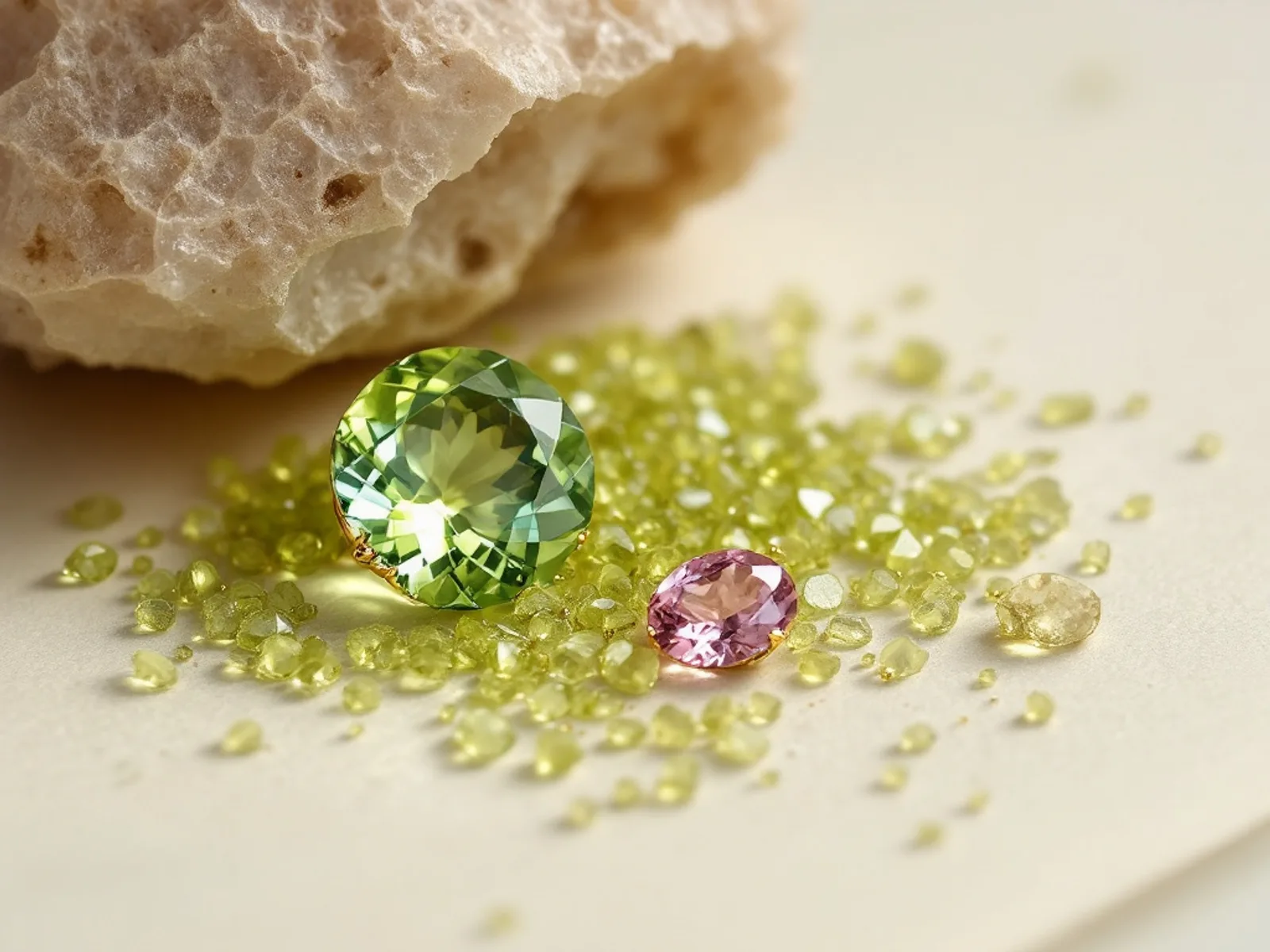
Pakistan's northern mountains produce ruby, emerald, spinel, peridot, aquamarine and topaz. Its city of Peshawar is the gateway for much Afghan and Central Asian gem material. For a buyer that raises two questions on every stone. What was mined in Pakistan, and what only passed through it. This page covers ruby from Azad Kashmir and Hunza, Swat emerald, and spinel via the Peshawar trade. It also covers Sapat peridot, Shigar aquamarine, and the provenance papers you should ask for.
Ruby and emerald: Azad Kashmir, Hunza and Swat
Ruby
Pakistan's ruby is marble-hosted, like Burmese ruby. It shares the low iron and strong red fluorescence of that type. The Hunza valley in Gilgit-Baltistan has been worked since the 1970s around Aliabad and Ganish. Most of the output is included cabochon grade, with a few small facet-quality stones. The Nangimali deposit in the Neelum valley of Azad Kashmir was found around 1979. It produces cleaner and better-coloured material, still mostly small. Both regions sit high up, with short seasons and hard access. Supply is thin. Buyers should note that Kashmir ruby has nothing to do with the Kashmir sapphire premium. The sapphire deposit is in Padar on the Indian side. The two are unrelated in geology and price.
Labs separate marble-hosted rubies from Pakistan, Afghanistan, Tajikistan, Vietnam and Burma by inclusions and chemistry. The overlap among these sources is real. A report may narrow origin to a region rather than a country. Heating is possible and is disclosed as such. A large share of Pakistani ruby sold as rough or cabochon has never seen a lab.
Swat emerald
Emerald was found at Mingora in the Swat valley in 1958. The Mingora, Gujar Kili, Charbagh and Shamozai workings have produced ever since. The host is talc-carbonate rock in an ophiolite belt. That gives stones rich in chromium and often in iron. Swat emerald is intensely saturated, sometimes slightly bluish green, and usually small. Clean stones over a carat are scarce. Like all emerald, assume it is oiled unless a report says 'no indications of clarity modification'. Panjshir emerald from Afghanistan crosses into the same market. It tends to be larger and more Colombian in look. Labs can usually tell the two apart.
Spinel and the Peshawar trade
Peshawar's Namak Mandi is the main gem market of the region. Its dealers handle Afghan lapis lazuli, Panjshir emerald, Jegdalek ruby, and Nuristan tourmaline and kunzite. They also handle spinel from Badakhshan in Afghanistan and Kuh-i-Lal in Tajikistan. Those are the historic balas ruby mines that supplied the great red spinels of the Mughal treasuries. Pakistan itself produces a little spinel alongside Hunza ruby. Most Namak Mandi business is in rough, sold by parcel to Bangkok, Jaipur and Hong Kong buyers. Cutting in Peshawar serves the local and Gulf markets.
The buying point is that 'Pakistani' and 'Afghan' are used loosely in Namak Mandi. A dealer's origin label there reflects the route, not a lab opinion. Spinel is rarely treated, so treatment risk is low. Its origin premium, above all for Tajik and Burmese red, means the report still matters.
Peridot and aquamarine
Sapat peridot comes from the high mountains of Kohistan and was found in the early 1990s. It is among the finest in the world. The colour is a clean, saturated yellowish green, in sizes well beyond what most sources give. Ludwigite needle inclusions are typical and are one of the ways labs recognise it. Peridot is not treated. Its rivals are Burmese and Arizona stones. Sapat holds its own at the top for large clean stones.
The Shigar valley above Skardu produces aquamarine crystals prized by collectors as much as by cutters. Morganite, tourmaline and apatite come from the same pegmatites. Pakistani stones are often a good blue by nature. They are sold unheated more often than stones from elsewhere. Heat is undetectable, though, and reports say 'may be heated'. Katlang, near Mardan, produces a rare topaz that is pink by nature. Most pink topaz on the market is heated. Ask for that distinction in writing.
Provenance papers and lab reports
Provenance here is a matter of paperwork and honesty, not lab science. Pakistani rough leaves through licensed exporters. Reputable dealers can name the valley and the trader they bought from. Afghan goods often arrive without any papers. Some buyers and some countries now ask questions about that. Ask for what exists.
- For ruby, emerald and spinel, ask for a report stating treatment and, where offered, origin. GIA, Gübelin, SSEF, AIGS, GRS and Lotus all issue them.
- Accept that a report may give a regional origin for marble-hosted ruby. That is honest.
- For peridot and aquamarine, origin is rarely reported. Buy on quality and treatment disclosure.
- Ask whether an 'Afghan' or 'Pakistani' label comes from a report or from the market.
Buying through the register
The dealers listed on this page have had their legitimacy, certification practice and disclosure checked. Ask them for the laboratory report. Ask them to confirm treatment in writing. Ask what they know about where the rough came from.
GemsVerified verifies dealers, not individual stones. Our review covers how a dealer works. The report from an independent laboratory tells you what the stone is.
Dealers on the register
View all in directory →No dealers are currently admitted for this page. The catalogue grows as dealers pass verification.
Questions, answered
Is Pakistani ruby the same as Kashmir sapphire?
No. Ruby from Azad Kashmir and Hunza is marble-hosted corundum from Pakistan's northern valleys, mostly small or cabochon grade. Kashmir sapphire comes from the Padar deposit on the Indian side and carries a premium that has nothing to do with Pakistani ruby. Ask for a laboratory report stating species, origin and treatment.
Is Swat emerald good?
Swat emerald from Mingora is among the most saturated in the world, chromium-rich and sometimes slightly bluish. Its limitation is size: clean stones over a carat are scarce. Like all emerald it is assumed to be oiled unless a report says otherwise, and laboratories can generally separate it from Panjshir emerald from Afghanistan.
Where does Pakistani peridot come from?
From the Sapat valley in Kohistan, at high altitude in an ophiolite belt, worked since the early 1990s. It produces some of the largest and cleanest peridot available, with the ludwigite needle inclusions laboratories recognise. Peridot is not treated, and origin is rarely stated on reports, so buy on colour, clarity and cut.
Is Namak Mandi in Peshawar a good place to buy gemstones?
It is the main rough market of the region and handles Afghan and Central Asian material as well as Pakistani. Prices reflect that, but origin labels there describe the trade route rather than a laboratory opinion, and most parcels carry no report. Buy from a dealer who will put treatment and origin in writing.
Are Pakistani gemstones treated?
It depends on the stone. Peridot and spinel are generally untreated. Aquamarine may be heated, and Pakistani aquamarine is often sold unheated. Emerald is oiled unless a report says otherwise, and ruby may be heated. Treatment is confirmed by an independent laboratory report, not by the seller, so ask for one on any valuable stone.