Zambia — dealers and sourcing guide
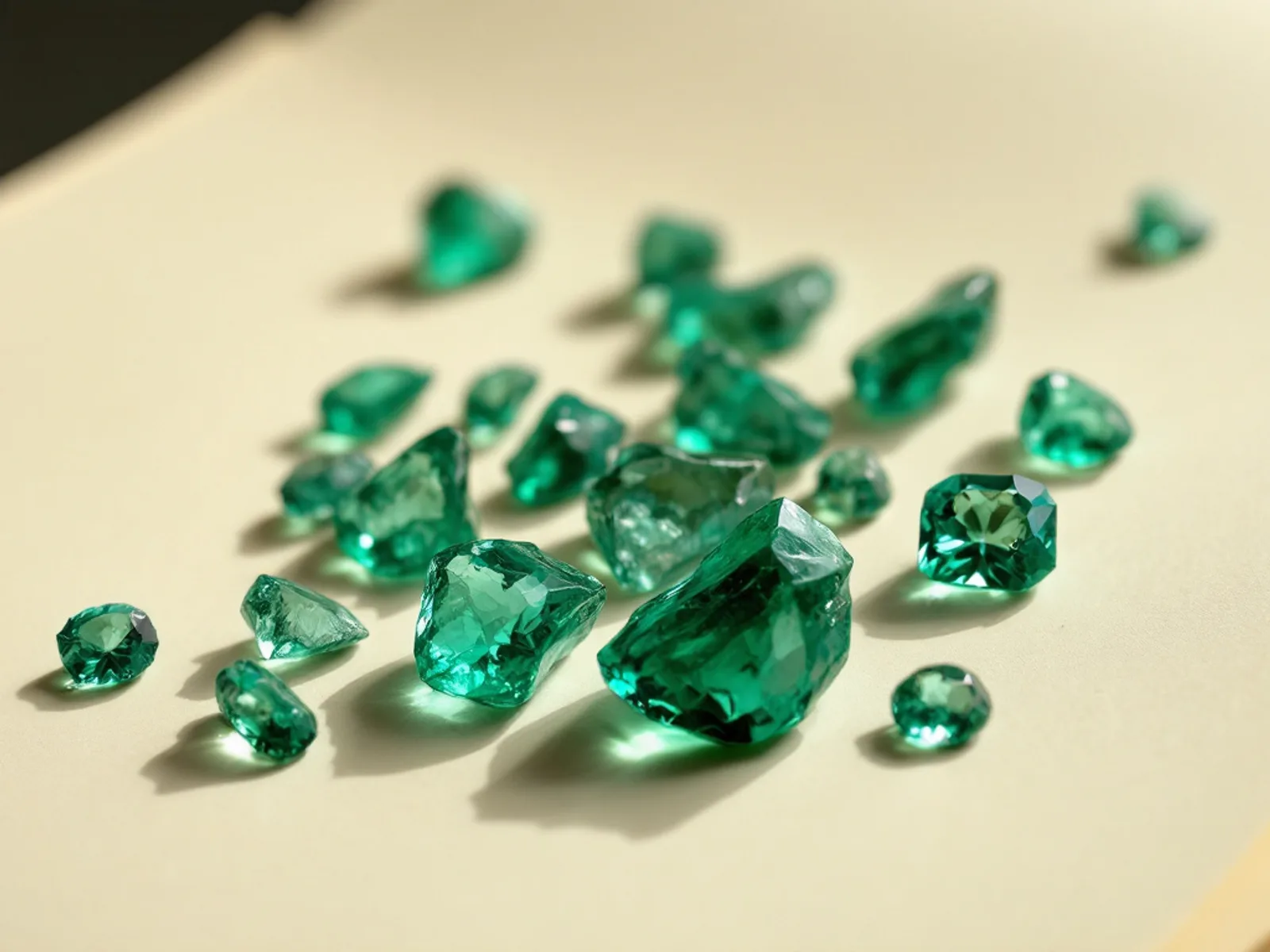
Zambia is the second force in world emerald and, by volume of fine material, arguably the first. The Kafubu belt on the Copperbelt gives a deeper, cooler green than Colombia does, and cleaner crystals with it, and over the last fifteen years the stones have stopped being priced as the alternative to Colombia and started being sought in their own right. Below: the belt and its mines, the auction system that moves the rough, what iron does to the colour, how oil grades appear on a report, the other Zambian stones, and what to ask a dealer.
The Kafubu belt
Emerald was first noted here in 1928 near the Miku river, and for fifty years nobody did much about it. Mining now centres on the ground south west of Kitwe, along the Kafubu river, where beryl grew in talc magnetite schist. That is all the geology a buyer needs. What matters is who digs and how the rough leaves.
The sector combines one of the largest emerald mines in the world, Kagem at Lufwanyama, with a second large open pit at Grizzly and a ring of licensed small scale workings. Kagem is three quarters owned by Gemfields and a quarter by the Zambian state, and it sells its rough through sealed bid auctions rather than at the mine gate; those auctions have run in Lusaka and Singapore, and rough also moves through the local trade in Kitwe and Ndola. The auction system gives Zambian emerald an unusually documented route from mine to market. Not a guarantee of anything. A paper trail, with lot numbers, which is more than most emerald has.
Colour, and the iron in it
Zambian emerald owes its slightly bluish, saturated green to iron alongside chromium. Colombian stones carry very little iron, which is why they read warmer and a shade brighter; a Zambian stone of the same saturation looks cooler and slightly darker in the same light. Dealers describe the top colour as bluish green to green, strongly saturated, medium to medium dark tone. Go darker than that and the price drops fast, because the stone stops looking green after six in the evening.
Crystals from the Kafubu belt tend to be cleaner than Colombian material. Under the microscope they show mica plates and fine tremolite needles rather than Colombia's three phase inclusions, and that, along with trace element chemistry, is largely how a laboratory tells them apart; Zambian stones carry more iron and more alkalis. GIA, Gübelin, SSEF, GRS and AIGS all give Zambia as an origin opinion. An opinion drawn from evidence, they will remind you. Not a mine certificate.
Oil grades
Better clarity allows lighter clarity enhancement, and this is where the money is. A meaningful share of Zambian production is sold with only minor oiling, and untreated stones appear often enough to sustain a premium market for them. Laboratory reports state the enhancement level: GIA writes none, minor, moderate or significant, and Gübelin and SSEF use a similar ladder with insignificant at the light end. The difference between none, minor and moderate moves prices substantially, and a stone that slips one rung on a recheck is a common cause of grief between buyer and seller.
Two other things belong on the report. Whether the filler is oil or resin, since resin is harder to remove and some buyers will not have it at any grade. And a recent date. Emeralds are re-oiled after cutting and again in the trade as a matter of routine, so on any stone above 2 ct we would rather see a report from this year than a cleaner one from five years ago.
Beyond emerald
The country also produces fine aquamarine from Lundazi in the east, amethyst from the Mapatizya field in the Southern Province, which is one of the largest amethyst mines anywhere, and tourmaline. Emerald dominates its reputation and will go on doing so. The aquamarine is heated as a matter of course to remove yellow; the heat cannot be detected and nobody pays extra for unheated. Amethyst is not treated as a rule, though citrine made by heating amethyst is a different product and should be sold as one.
Buying Zambian stones
Ask for the enhancement level in writing and for an origin opinion where the premium depends on it. Then match the report to the stone: weight to the second decimal, measurements, and the plotted inclusions if the laboratory plots them. Jaipur cuts most Zambian rough, and Jaipur oils generously, so a stone bought from a cutting house may carry more filler than the same rough would have shown at auction. Ask when it was last cleaned and oiled, and with what.
Ask, too, whether the stone came through the auction system or the informal trade. Both are legal routes. Only one comes with a lot number, and for a stone above a few carats that number is worth having.
Buying through the register
The dealers listed on this page have had legitimacy, certification practice and disclosure checked. Ask for the laboratory report, have the treatment level confirmed in writing, and compare declared treatments and origins across listings before you make contact; that is what the register is for.
GemsVerified verifies dealers, not individual stones. The report from an independent laboratory tells you what the stone is.
Dealers on the register
View all in directory →
Questions, answered
What stones come from Zambia?
Emerald from the Kafubu belt on the Copperbelt leads by a distance, mined at Kagem, Grizzly and a ring of smaller licences south west of Kitwe. Aquamarine comes from Lundazi, amethyst from Mapatizya, and tourmaline in smaller quantity. See the verified dealer grid on this page for what is available now.
How does Zambian emerald differ from Colombian?
It runs slightly bluer and a touch darker, because iron sits alongside the chromium, and the crystals are cleaner, which allows lighter clarity enhancement. Colombian stones read warmer and are often more heavily oiled. Laboratory reports state both origin and enhancement level, and that is the basis for comparison, not the country name on the invoice.
Is Zambian emerald oiled?
Most of it, lightly. A meaningful share is sold with minor clarity enhancement and some with none, which is unusual for emerald. The report should say none, minor, moderate or significant, and whether the filler is oil or resin. Because emeralds are re-oiled in the trade, ask for a recent report rather than an old one.
What does minor clarity enhancement mean on an emerald report?
That the laboratory found a small amount of oil or resin in surface reaching fissures. GIA grades none, minor, moderate and significant; Gübelin and SSEF use a similar ladder. Each step down is a lower price, and a stone can move a step if it is re-oiled, so the grade belongs to the report date, not to the stone for life.
How do laboratories know an emerald is from Zambia?
Inclusions and chemistry. Zambian emerald grew in schist and shows mica plates and tremolite needles, with more iron and alkalis than Colombian stone, which shows three phase inclusions and very little iron. GIA, Gübelin, SSEF, GRS and AIGS give Zambia as an origin opinion from that evidence. It is an opinion from an independent laboratory, not the seller's word.